What is the hyssop of the Bible?
It is za'atar, زعتر, the grey-green wild herb Palestinians still gather, and it is not the garden plant sold as hyssop. That plant, Hyssopus officinalis, does not grow wild in Palestine. An Arabic translation of Exodus made in the tenth century already writes صعتر.
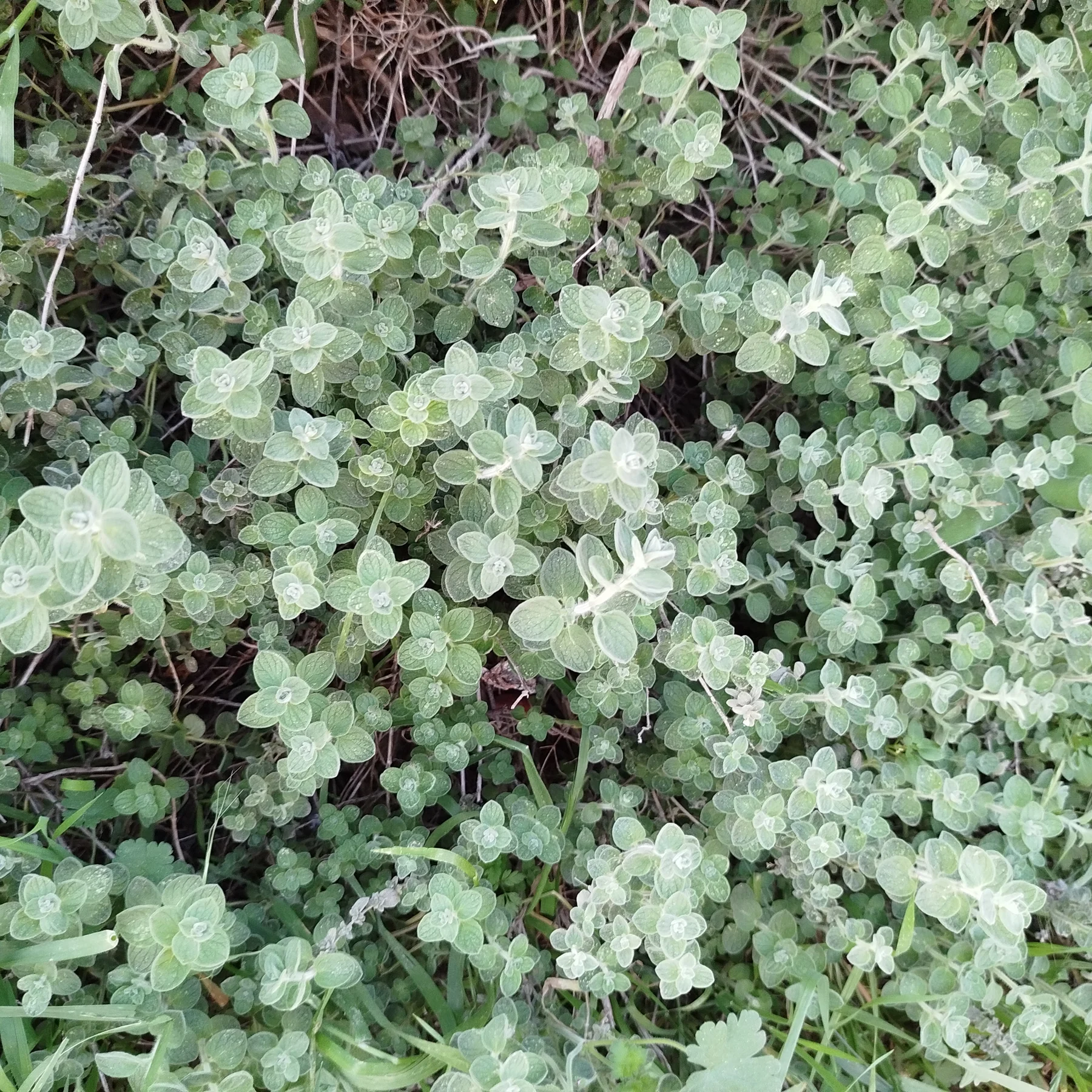
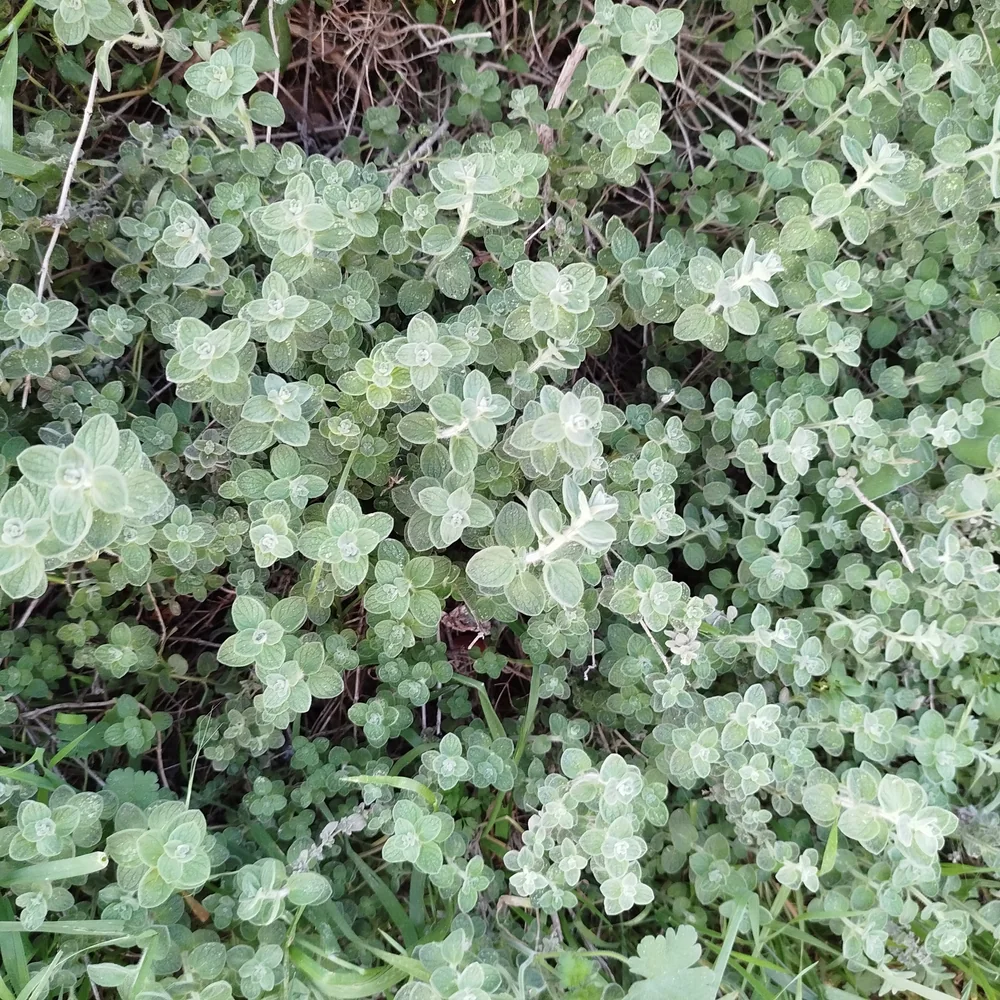
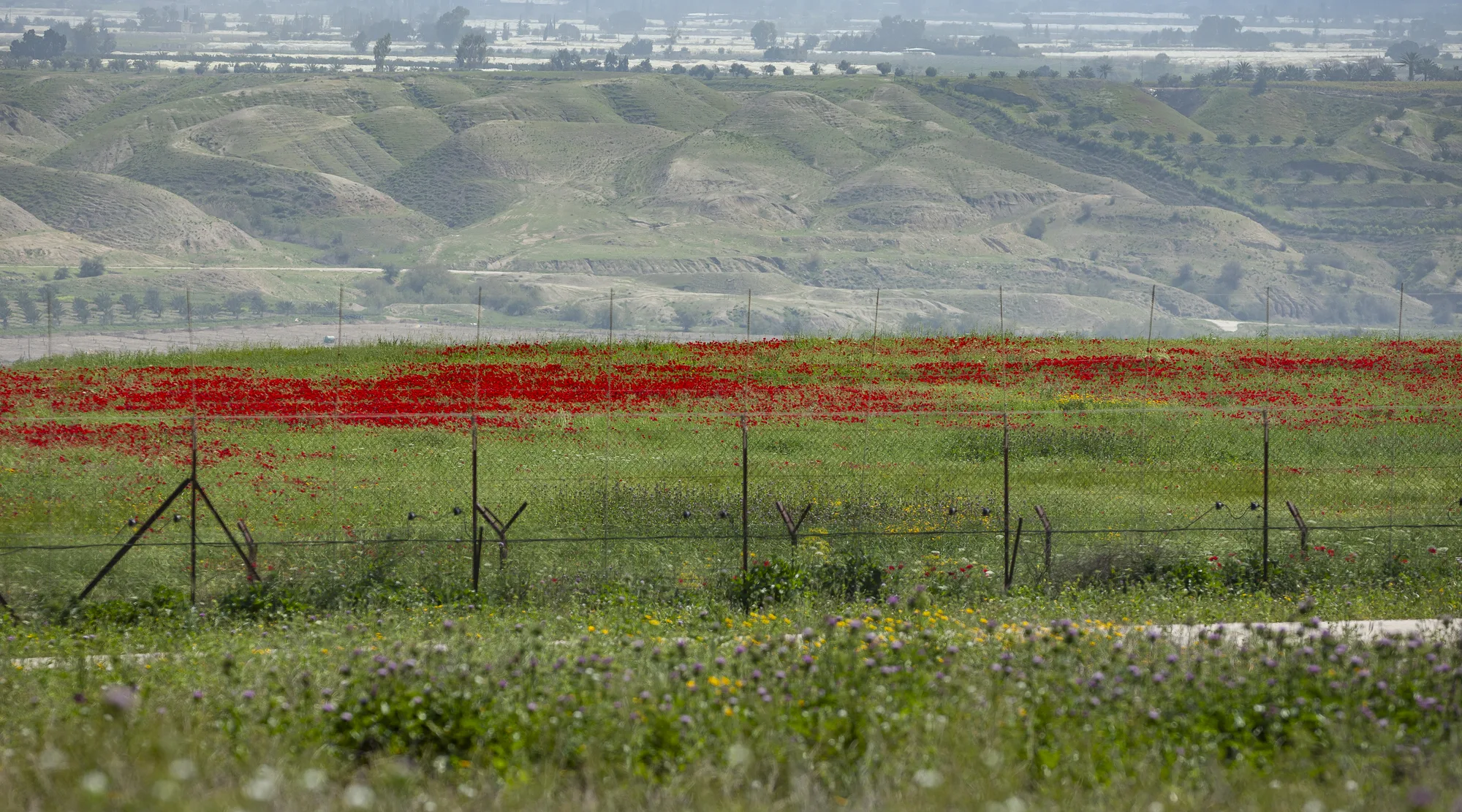
Photograph by محمد شراونة · CC BY-SA 4.0
Published · 6 registers · 12 sources cited
01The short answer
The hyssop of the Bible is most probably za'atar, Origanum syriacum. It is a small aromatic herb of the mint family that grows on rocks and terrace walls across Palestine, and it is the same plant that is dried, ground with sumac and sesame, and eaten on bread (what za'atar is).
It is not Hyssopus officinalis. The purple-flowered herb sold in garden centres under the name hyssop took the biblical name centuries later, in European herbals. It is not part of the wild flora of Palestine, so nobody in the text could have gone out and cut a bunch of it.
The identification is old, and it is written in Arabic. Where the Hebrew of Exodus 12:22 has ezov, Saadia's tenth-century Arabic translation has صعتر, sa'tar, an older spelling of the word Palestinians say today. Hastings' Dictionary of the Bible pointed the same way in 1900, more than nine centuries later.
02What the texts ask the plant to do
The Bible never describes hyssop. It only uses it. Read together, the passages need a small plant that can be tied into a bunch, that holds liquid well enough to sprinkle it, and that grows out of walls.
| Passage | What the hyssop does |
|---|---|
| Exodus 12:22 | A bunch is dipped in blood and touched to the lintel and doorposts at Passover |
| Leviticus 14:6, 14:49 | Used with cedar wood and scarlet to cleanse a person, and then a house |
| Numbers 19:6, 19:18 | Burned with the red heifer; then used to sprinkle water |
| 1 Kings 4:33 | Set against the cedar of Lebanon as the small plant: “the hyssop that springs out of the wall” |
| Psalm 51:7 | “Purge me with hyssop” |
| John 19:29 | A sponge of vinegar is lifted on hyssop to the mouth of the crucified |
| Hebrews 9:19 | Used with scarlet wool to sprinkle the book and the people |
The Arabic Bible does not translate the word at all. In all four verses this record checked (Exodus 12:22, 1 Kings 4:33, Psalm 51:7 and John 19:29) the modern Arabic text reads زوفا, zufa, which is the Hebrew word carried across. A reader in Nablus or Bethlehem meets a plant name in church that nobody uses in the market.
03Why it is not the garden herb
Hyssopus officinalis is not a native plant of Palestine. Grace Crowfoot and Louise Baldensperger, who spent years on this question from the village of Artas near Bethlehem, called that “one certain thing in the whole controversy” in 1932.
The Palestinian record agrees. This record searched every row of both published checklists of the country's native plants and the two open occurrence counts:
- 0 rows for Hyssopus in the 2022 checklist of Palestine's native flora, West Bank and Gaza (1,826 taxa).
- 0 rows for Hyssopus in the 2026 checklist of the West Bank (1,710 taxa).
- 0 records of Hyssopus officinalis in GBIF for Palestine, Jordan, Lebanon or Syria, against 38, 9, 74 and 69 of Origanum syriacum.
The name moved; the plant never did. Greek and Roman herbals used “hyssop” for a loose group of herbs, very probably marjorams. Northern European herbalists copied the old prescriptions and attached them to an aromatic plant they had at home. By the sixteenth century English herbals meant Hyssopus officinalis when they wrote hyssop, and some of their authors noticed that it no longer matched the ancient descriptions.
The same transfer shows in the name the databases now give za'atar. The 2018 Palestinian wild-food survey prints the accepted English name beside Origanum syriacum, and it reads “Biblical hyssop”.
04The evidence is in Arabic, and it is a thousand years old
Saadia Gaon translated the Torah into Arabic in the tenth century, and at Exodus 12:22 he wrote وخذوا باقة من صعتر: “take a bunch of sa'tar.” He did not borrow the Hebrew word. He named a plant his readers could pick (Tafsir, Exodus 12:22, Paris edition of 1893).
صعتر is still on the Palestinian books. The 2022 and 2026 checklists both give three Arabic names for Origanum syriacum: زعتر بري, صعتر and سعتر. The second is Saadia's spelling, letter for letter.
The Samaritans of Nablus used za'atar as hyssop within living record. Crowfoot and Baldensperger visited the Samaritan High Priest, who showed them a Pentateuch in three languages written in his own hand. Where the Hebrew had ezobh, the Samaritan column had zufa and the Arabic had sa'tar, and he told them it meant the za'atar of daily life that grows on Mount Gerizim. One of them attended the Samaritan Passover there in April 1930 and watched a priest dip a small bunch of za'atar in blood and water and touch it to the doorposts of the festival huts.
And zufa survives too, attached to a different plant. The checklists give زوفا بيضاء, white zufa, as a name for Micromeria fruticosa, another small herb of the mint family that Palestinians also call زعتر بلاط, paving-stone za'atar. Both of the Bible's Arabic words for hyssop are alive in Palestine, and both sit inside the za'atar group.
05Which za'atar, when there are seven
The Mishnah rules that hyssop for ritual use must be plain hyssop: not “Greek hyssop”, not “stibium hyssop”, not “Roman hyssop”, not “wild hyssop”, and not any kind that carries a qualifying name. Crowfoot and Baldensperger heard in that rule exactly how Palestinians talk about za'atar.
| Name they recorded in Palestine | Meaning | Plant, as they named it in 1932 |
|---|---|---|
| Za'atar | — | Origanum maru, now O. syriacum |
| Za'atar farsi | Persian | Thymus capitatus |
| Za'atar sabbali | eared | Thymbra spicata |
| Za'atar homar | donkey's | Satureia thymbra |
| Za'atar mane | — | Calamintha incana |
| Za'atar Sidna Musa | of our lord Moses (Sebastiya) | Calamintha incana |
| Za'atar hindi | Indian | Ocymum indicum |
Seven names, six species, and only one of them is called za'atar with nothing added. That one is Origanum syriacum. The plant the Mishnah allows is the plant that needs no adjective, and in Palestine that is still true of the same herb.
The five za'atars Palestinians gather today, with their months, are on the za'atar page, and every name in both languages is in the plant-names index.
06The rival candidate, and the verse that does not fit
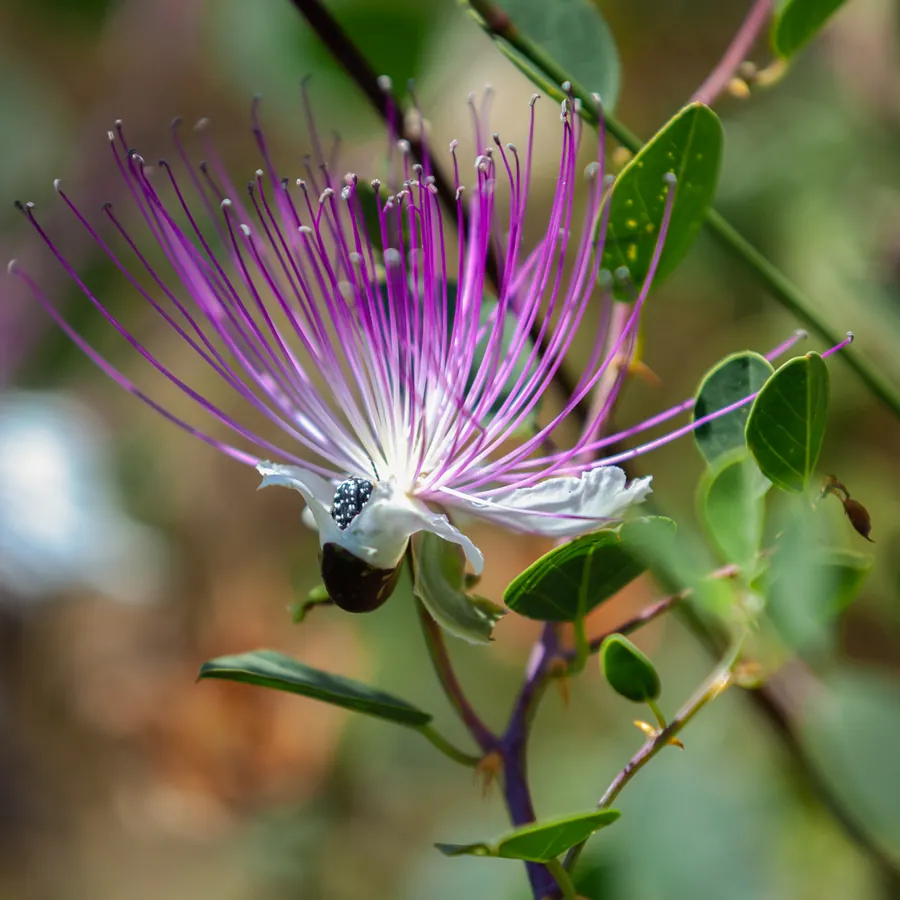
The serious rival is the caper. In 1846 the botanist J. Forbes Royle argued in the Journal of the Royal Asiatic Society that the hyssop was Capparis spinosa, الكبّار. Three of his reasons were that the caper grows out of walls, that one of its Arabic names, asuf, sounds like ezov, and that it has a stem long enough to carry a sponge.
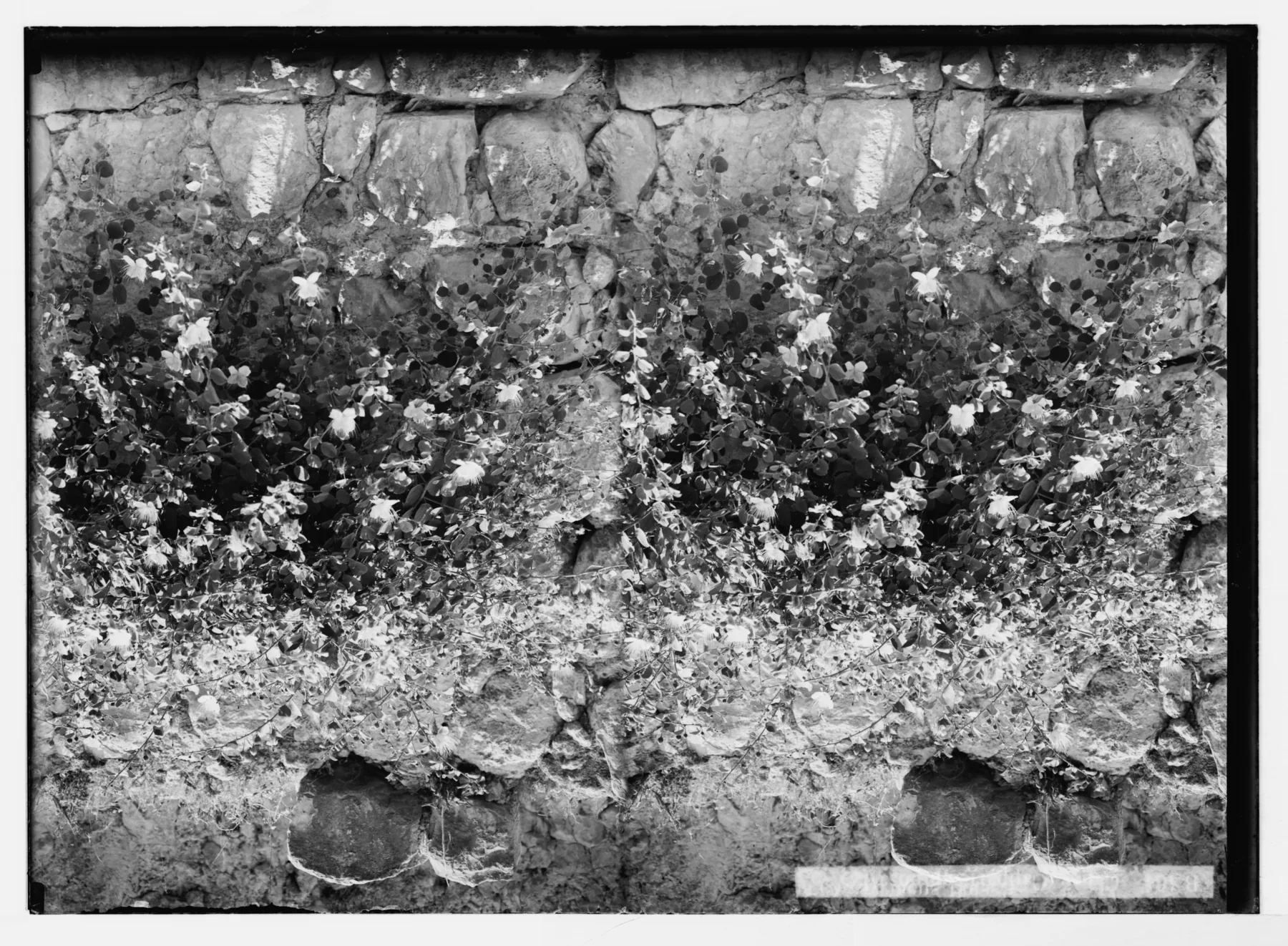
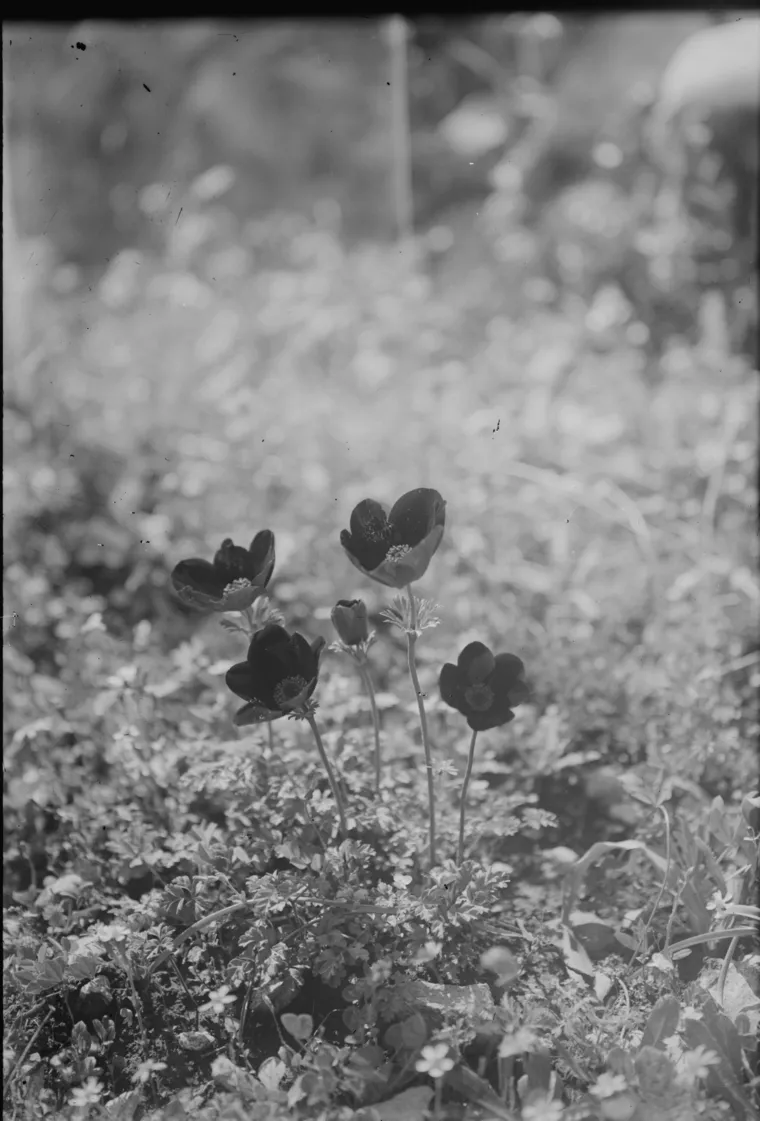
Library of Congress, Matson Collection, matpc.05843 · public domain. A caper springing out of a wall, which is the whole of Royle's first argument in one frame.
John 19:29 is the weak point of the za'atar answer. Za'atar is a low herb with thin twigs, and lifting a soaked sponge on it is hard to picture. Royle's caper handles that verse better. On this record's reading it handles Exodus worse: a thorny caper branch is a poor thing to tie into a bunch and use as a brush.
- The Bible's hyssop is not Hyssopus officinalis. That plant is absent from Palestine's native flora.
- The best single answer is za'atar, Origanum syriacum. Saadia wrote it in the tenth century and the Samaritans were still using it in 1930.
- Crowfoot and Baldensperger wrote “most probably”, and this record keeps their hedge. One verse fits the caper better.
- The plant has its own name where it grows. زعتر.
Za'atar is also one of the three wild plants Palestinians are prosecuted for gathering under Israeli nature law. The court record and its sources are on Under the Law.
Sources
- Saadia Gaon, Tafsir, Exodus 12:22 — Tafsir al-Torah bi-al-Arabiya, Paris, 1893; the Judaeo-Arabic reads باقة من صعتر. Read at source
- Grace M. Crowfoot and Louise Baldensperger, From Cedar to Hyssop: A Study in the Folklore of Plants in Palestine, London: Sheldon Press (1932), chapter V.1, “Hyssop,” pp. 69–78 — the Samaritan High Priest at Nablus, the April 1930 Passover on Mount Gerizim, the seven za'atar names, the transfer of the name in the herbals, and the Mishnah and Maimonides references. Read in full transcription; see the note above. The book's introduction says the chapter is reprinted by leave of the Palestine Exploration Society
- J. Forbes Royle, “On the Hyssop of Scripture,” Journal of the Royal Asiatic Society 8 (1846) — the caper argument: the wall, the Arabic name asuf, the stick for the sponge. Read in the scanned original
- M. S. Ali-Shtayeh, R. M. Jamous and S. Y. Abuzaitoun, “Analysis of floristic composition and species diversity of vascular plants native to the State of Palestine (West Bank and Gaza Strip),” Biodiversity Data Journal 10 (2022): e80427 — supplementary checklist searched row by row: no Hyssopus; Origanum syriacum as زعتر بري، صعتر، سعتر; Micromeria fruticosa as زعتر بلاط، زوفا بيضاء. CC BY 4.0
- M. S. Ali-Shtayeh, S. Y. Abuzaitoun and R. M. Jamous, “An updated checklist of the vascular flora native to the State of Palestine – West Bank,” Biodiversity Data Journal 14 (2026): e188380 — supplementary checklist searched row by row, with the same result. CC BY 4.0
- Hyssopus officinalis L. — GBIF 5341387 and Origanum syriacum L. — GBIF 6411178 — occurrence counts by country code, via api.gbif.org, 11 October 2026. Origanum maru L. is listed there as a synonym of O. syriacum L.
- Exodus 12:22, 1 Kings 4:33, Psalm 51:7 and John 19:29, in Arabic — كتاب الحياة; all four read زوفا. Read at source
- Palestinian Wild Food Plants / النباتات البرية الغذائية الفلسطينية — ed. Omar Imseeh Tesdell · Khalil Sakakini Cultural Centre and AFAC, 2018 · the English name “Biblical hyssop” printed against Origanum syriacum. Licensed CC BY-NC-ND; the fact is cited, nothing is reproduced
- زعتر ـ نباتات فلسطين — photograph by محمد شراونة, Palestine, March 2025, CC BY-SA 4.0, via Wikimedia Commons
- “Wild flowers of Palestine. Caper (Capparis spinosa L.),” LOC matpc.05843 — American Colony Photo Department, c. 1900; public domain. The plate is read in full on Record 05, الكبّار
- Za'atar as a plant, the five species gathered today and their months: What is za'atar?
- The other scriptural name this record has traced back to a Palestinian plant: the lily of the field. The prosecutions: Under the Law.

._LOC_matpc.05843.jpg)