What is za'atar?
A plant, before it is anything else. The mixture in the jar is named after it, not the other way round. It is not thyme. And in Palestine it is not one plant: it is at least five, and together they are in leaf for ten months of the year.
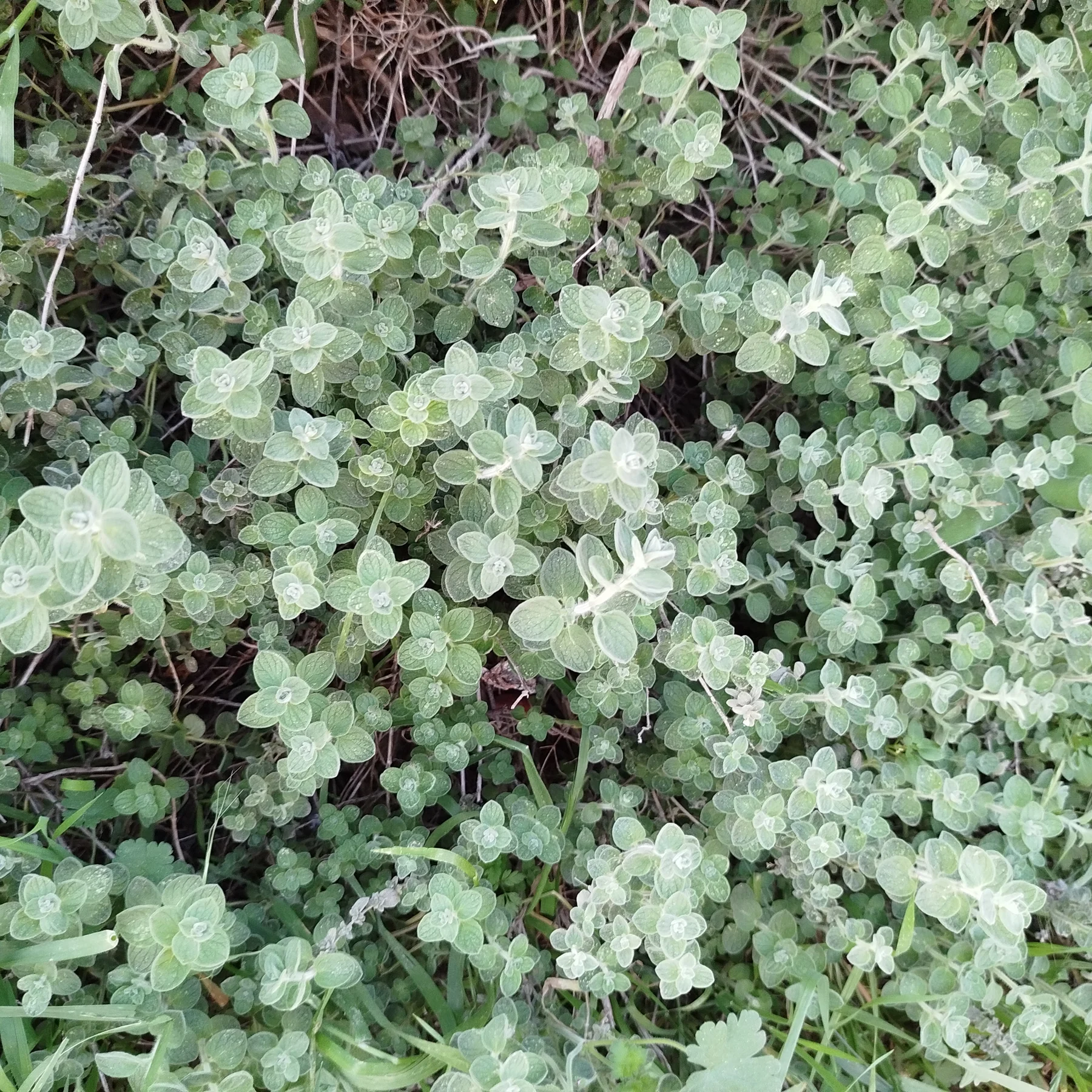
Photograph by محمد شراونة · CC BY-SA 4.0
Updated · 5 registers · 8 sources cited
01The short answer
Za'atar, زعتر, is a wild plant that grows on the hillsides of Palestine. Its accepted botanical name is Origanum syriacum L., family Lamiaceae (GBIF 6411178, accepted). The leaf is the part that is gathered.
The mixture sold in jars is named after the plant. Dried za'atar leaf, ground with sumac and toasted sesame and salt, is called za'atar because the herb in it is za'atar. Most English writing has this backwards, treating the plant as a variety of the condiment. In Palestine the plant came first, and the plant is the thing that is gathered, dried, and now prosecuted.
It is not thyme. Origanum is oregano's genus. True thyme is Thymus, a different genus, and the standard English rendering of زعتر as "wild thyme" is a translation error that has hardened into a fact.
02Za'atar is not one plant. It is at least five.
Palestinian Wild Food Plants, the 2018 survey published by the Khalil Sakakini Cultural Centre and AFAC, lists twenty-five wild edible species. Five of them belong to the za'atar group, all of them aromatic Lamiaceae, all of them gathered for the leaf, and each with its own season (Palestinian Wild Food Plants).
| Species | Part gathered | Foraging period |
|---|---|---|
| Clinopodium serpyllifolium | Leaf | Late January – March |
| Satureja thymbra | Leaf | March – May |
| Thymbra spicata | Leaf | April – June |
| Origanum syriacum | Leaf | May – August |
| Thymbra capitata | Leaf | Late May – Early October |
Laid end to end, those five windows run from late January to early October. Ten months of the twelve.
That is what the word carries in Palestine, and it is the part that does not survive translation. Za'atar is not the name of a species. It is the name of a category of aromatic hillside herb that a household knows how to find, and knowing it means knowing which one is up this month. Collapse the five into one English word and you have kept the flavour and thrown away the calendar.
The survey contains no Thymus at all. Not one species, in twenty-five. The plant that English calls thyme is absent from the Palestinian wild-food record, while four genera that English does not have a word for are in it.
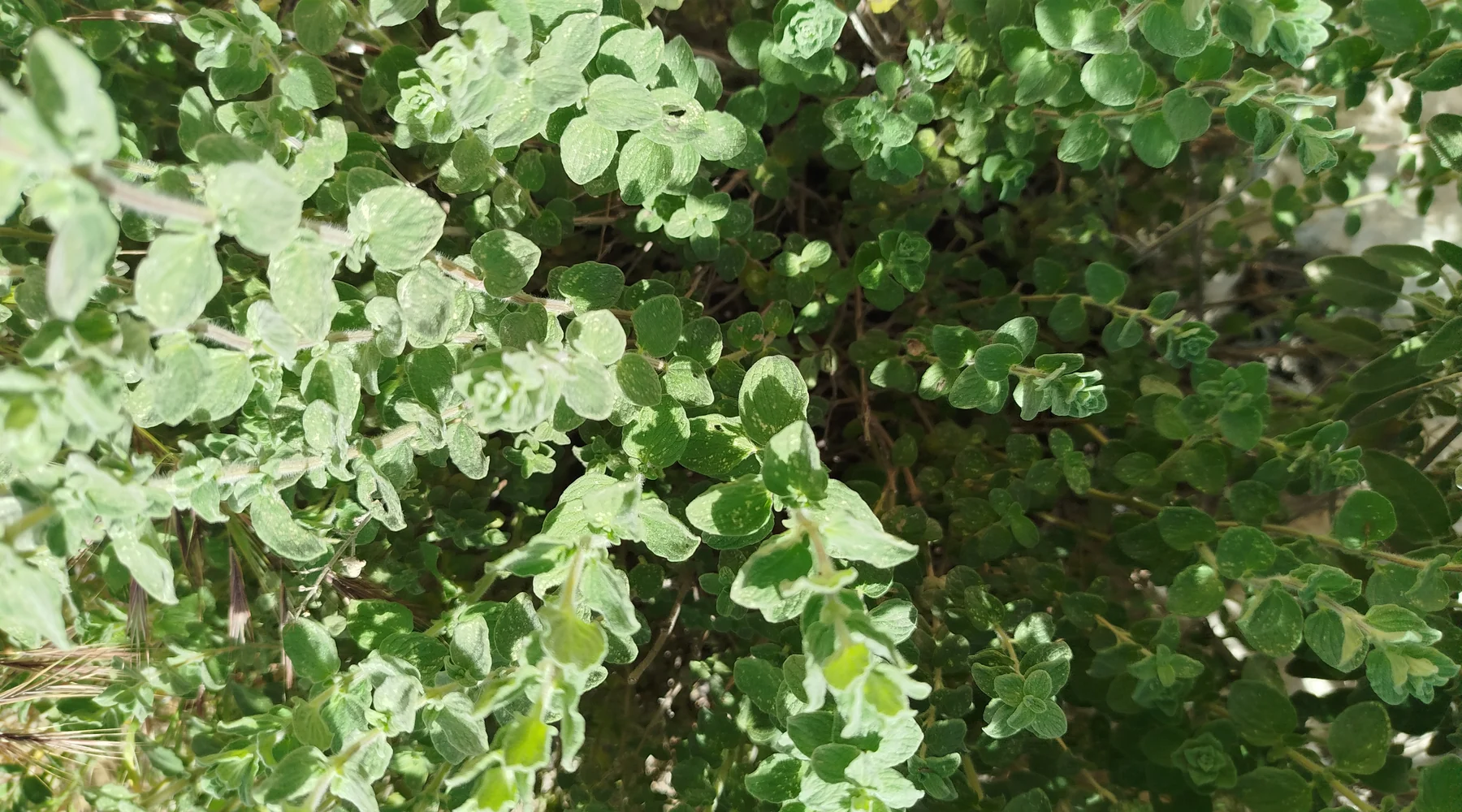
Photograph by محمد شراونة · CC BY-SA 4.0
03What the reference books call it instead
The 2018 survey prints, beside each Arabic name, the accepted English name from the global taxonomic databases. Against Origanum syriacum that column reads "Biblical hyssop."
Not za'atar, which is what it is called by the people who gather it, in the language they gather it in, in the country it grows in. The internationally accepted English name for this plant refers it to a book. It is the same move this record has already documented on the anemone, filed by foreign photographers as a "Lily of the field," and on the national flower, filed under the ridge rather than the village.
Other names exist and are used. The photographer whose picture is at the top of this page labels his own images زعتر جبلي, mountain za'atar, and gives مردقوش سوري, Syrian marjoram, as an alternative. Both of those describe the plant. Neither of them sends you to a bible.
04The famous survey of Palestinian flowers never photographed it
Between about 1900 and 1920 the American Colony Photo Department in Jerusalem made a photographic series called Wild Flowers of Palestine. This record has counted its plates and worked through them repeatedly.
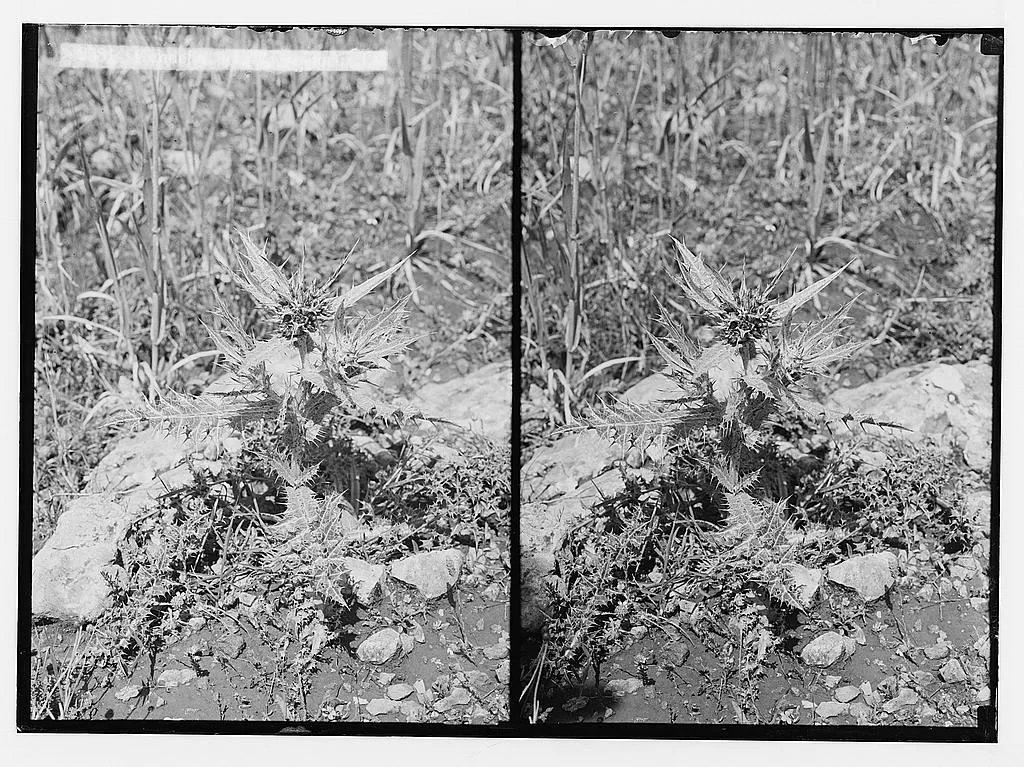
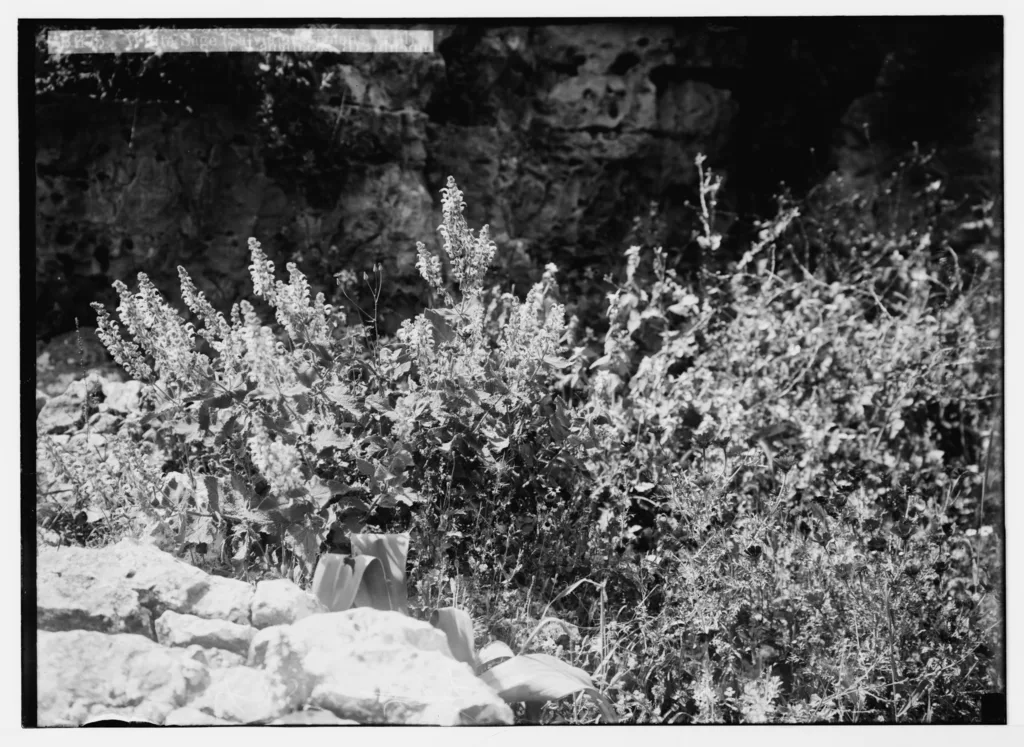
Searched for za'atar, the series returns nothing. No Origanum. No Thymbra. No Satureja. The most widely eaten wild plant in Palestine, growing on every hillside they walked over, is not in the catalogue.
This is now the third time the same shape has appeared. The series photographed akkoub, which is eaten. It photographed a sage and captioned it as the Palestinian one, and it was a different species. And it did not photograph za'atar at all.
A catalogue of the wild flowers of Palestine that omits the plant in every Palestinian kitchen is not incomplete by accident. It is a record of what the people holding the camera found worth photographing.
05And it is one of the three plants you can be prosecuted for picking
Za'atar is one of three plants at the centre of the enforcement record: with akkoub and maramia, it is protected under Israeli nature law in a way that produces criminal cases against the people who gather it. Over 2004 to 2016 the courts decided 61 cases concerning za'atar and akkoub. Every defendant was Palestinian.
The full legal record, the figures, their sources and their limits are set out on Under the Law, and this page does not restate them. What belongs here is the plainer observation: the three plants that carry criminal penalties are all edible, and the two flowers this country puts on its emblems are toxic and have never produced a single indictment.
Sources
- Palestinian Wild Food Plants / النباتات البرية الغذائية الفلسطينية — ed. Omar Imseeh Tesdell · Khalil Sakakini Cultural Centre and AFAC, 2018 · the twenty-five species, the five za'atar-group entries with their edible parts and foraging periods, and the "Biblical hyssop" English name. Licensed CC BY-NC-ND — facts cited, nothing reproduced or adapted. The counts and the ten-month span on this page were computed from its species list by this record.
- Origanum syriacum L. — GBIF 6411178 · accepted name, family Lamiaceae, verified via api.gbif.org
- Plants of the World Online — Origanum syriacum — Royal Botanic Gardens, Kew · IPNI 453375-1
- زعتر ـ نباتات فلسطين and زعتر جبلي، فلسطين — photographs by محمد شراونة, March 2025 · CC BY-SA 4.0 via Wikimedia Commons · the two images on this page, used with credit under the licence. A Palestinian photographer's own work, titled in Arabic.
- M. S. Ali-Shtayeh, R. M. Jamous, J. H. Al-Shafie' and others, “Traditional knowledge of wild edible plants used in Palestine (Northern West Bank): a comparative study,” Journal of Ethnobiology and Ethnomedicine 4 (2008): 13 — the Palestinian ethnobotanical survey underlying much of the 2018 book; cited via that book's reference list, not read at source
- G. M. Crowfoot and L. Baldensperger, From Cedar to Hyssop: a study in the folklore of plants in Palestine (London: Sheldon Press, 1932) — listed in the 2018 survey's references; cited, not read
- Under the Law — the court record 2004–2016 (Rabea Eghbariah, 61 cases), the Adalah enforcement figures 2016–2018, and Jumana Manna's Foragers (2022), with their full sourcing and stated limits
- The “Wild Flowers of Palestine” photographs — this record's count of the American Colony series, against which the absence in Register 04 was checked