What is out, and when.
Every plant in this record has months attached to it. Set them side by side and you get a working year: what is in flower, what is being gathered, and what the rains are doing.
Updated · 7 registers · 8 sources cited
01The year starts in December
The Palestinian farming year does not begin in January. It begins with the rain, which means it begins in December, and the month names carry that.
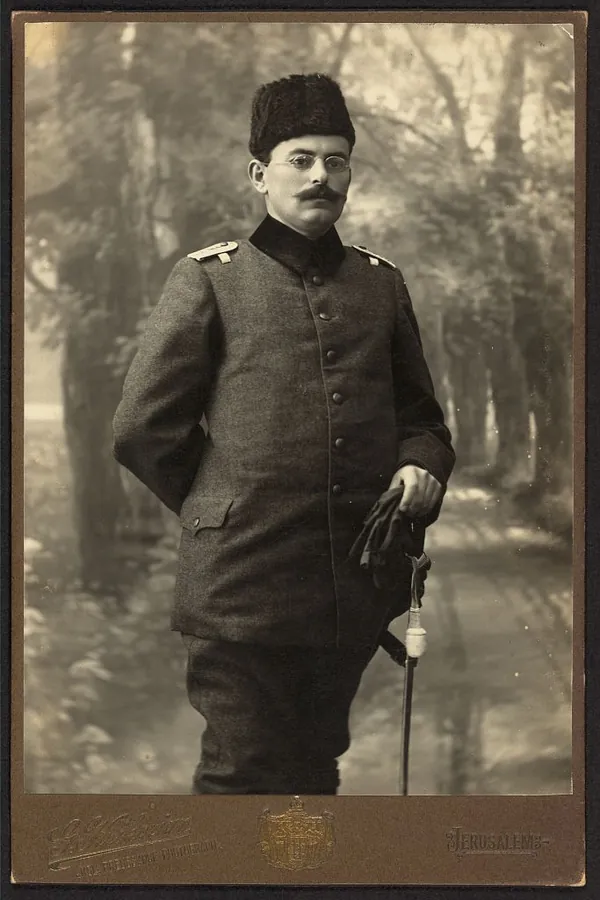
Writing in 1923, Tawfiq Canaan set out the names as people actually used them. December is الأجرد, al-Ajrad, from jarada, to strip or to peel: the bare month, the one without vegetation, like trees stripped of their leaves. He records the saying he heard from a woman in Jerusalem:
الأجرد بيجرد الشجر من ورقه
وبعض المرات السنة من شتاها
December strips the trees of their leaves, and sometimes it strips the year of its rain. January is كانون الأصمّ, al-Asamm, the deaf. April is khamis, the fifth, counting from December as the first (Canaan, JPOS 3, 1923; more on Canaan).
Count April as the fifth month and the whole calendar rearranges itself around water. The year opens when the rain arrives and closes when the last of it has gone.
02The turn: 14 September
The hinge of the year is the Feast of the Cross, 14 September by the Julian calendar. Canaan records the rhyme that marks it:
ما لك صيفيات بعد الصليبيات
You have no summers after the Feast of the Cross. And lightning on that day is a good sign rather than a bad one, because it means the rains have set in properly: if there is lightning on the Feast of the Cross, the rain will never depart. At Beit Jala they said it of the mountain northeast of the town, the slayyib.
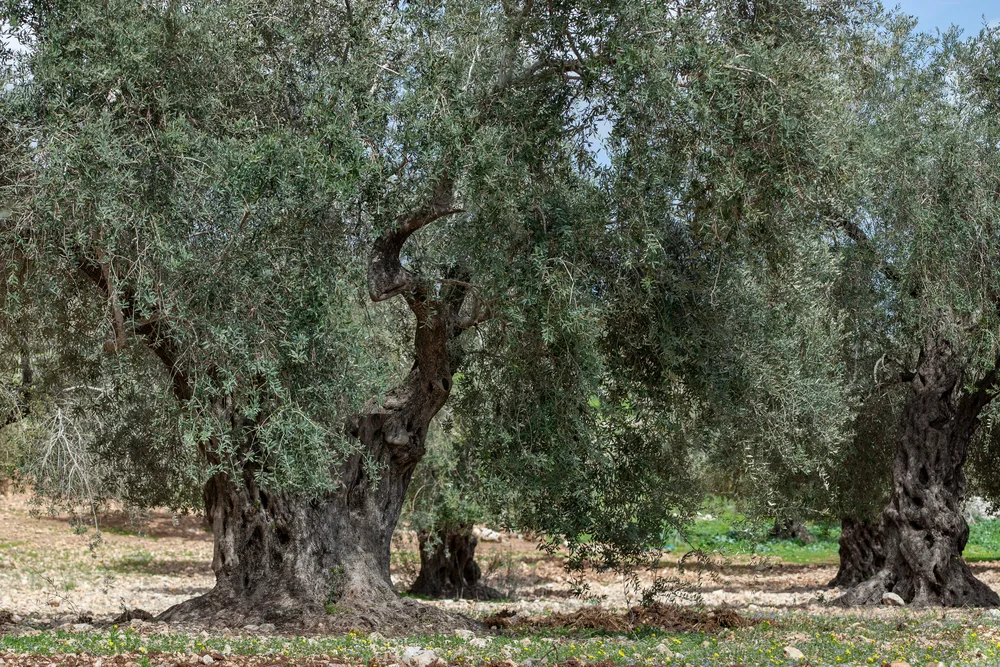
The same date runs the olive harvest. From Canaan's 1928 paper: when the Feast of the Cross passes, do not take the beating stick from your olive trees (Record 03). One date, marking the end of summer, the arrival of the rain, and the start of the year's biggest harvest.
03Khamis an-Nabat, the Thursday of the Plants
There is a day in the Palestinian year given over to going out and gathering wild plants, and Canaan wrote it down in 1923.
خميس النبات, Khamis an-Nabat, falls about a fortnight before Greek Easter. Canaan fixes it by the Nebi Musa feast, which begins fifteen days after Khamis an-Nabat and always coincides with the Greek Easter, so in practice it lands in late March or April, when the hillsides are at their fullest.
On that Thursday afternoon the unmarried young women went out to the fields for flowers and sweet-smelling herbs. As they cut, they addressed the plant:
طقّ ونتّ
شو دوا الراس يا شجيرة
Crack and pull out. What is the remedy for the head, O little tree. The remedy meant headache, and also thicker hair and a better complexion.
The flowers went into water and were left out all night under the open sky so the stars could work on them, a practice Canaan names تنجيم, tanjim. In the morning the women washed their hair in that water, or mixed it into the bath, then dressed in their best clothes and went back out to the fields (Canaan, JPOS 3, 1923, pp. 24–25).
He also records the proverb attached to the day: three things will lengthen your life — walking on grass, riding good horses, and marrying.
A named day in the calendar, in spring, whose content is walking out to a hillside and picking wild plants.
04The months, as people described them
Reviewing another study of Palestinian plant folklore in 1933, Canaan added a set of month proverbs he had not published anywhere else. They are worth having because they describe the year the way someone living it would, by what the cold does and when you can stop feeding the fire.
- February is the striker. شباط اللبّاط بيقطم البقر في الرباط — February, the striker, keeps the cows tied in their chains, because it is too cold to let them out. An old woman in winter is supposed to say rather death than parting with the fire-stove.
- March is when that breaks. في آذار بيطل الجار عالجار وبترمي العجوز صقفة النار — in March a person begins to visit his neighbour, and the old woman throws away the earthenware holding the fire. And in March night and day become equal.
- August turns it back. في آب بيتخلق السحاب — the clouds begin to form in August.
- Ploughing follows the same hinge as the olive harvest: the early ploughing should begin after the Feast of the Cross, recorded in Transjordan.
He also gives the blessing said over seed: O seed, feed us, and feed the birds, and the person who cuts the ears without permission and eats, and the guest, and the weak, and the hungry. The order is worth reading twice. The thief is in the list, ahead of the guest (Canaan, review in JPOS 13, 1933, pp. 174–175).
كل شي في أوانه منيح
Everything is good in its own season.
05The plant that forecasts the year
Two contributors to the same journal, writing a few years apart, arrive at the sea squill from opposite directions, and between them they show a plant doing a job.
Stephan Hanna Stephan — a Palestinian from Beit Jala, the same town as Canaan and, like him, schooled at the Schneller institution in Jerusalem — notes in 1922 that the Arabic word for autumn, خريف kharif, is itself a plant name — it means the autumn crocus, or the sea squill (Stephan, JPOS 2, 1922, 159–170). The squill throws its white spike out of bare summer ground, ahead of its own leaves and ahead of the rain. A season is named after the thing that announces it.
Canaan, in 1928, records what the fellah then does with it. From the way the squill blossoms he judges whether the winter or the summer crop will be the better one. The flowering is read as falling in three distinct periods, called ربطات rabtat or بروج buruj — the first being the first week after the first rain, then the second and third weeks. Heavy blossom in the first is a good omen for the winter crops; heavy blossom in the third points to a good summer crop (Canaan, JPOS 8, 1928, 132–133).
Stephan worked in the Mandate Department of Antiquities and broadcast on the Arab Hour; in 1948 he and his family were made refugees, and he died in Lebanon the following year, aged fifty-four (the Jerusalem Circle).
He also confirms, from his own material, the fact this whole page turns on: the agricultural year begins with the first rain. Two authors, different sources, same starting line.
Canaan records the sowing rules in the same register — spacing, given as speech:
- Lentils sown densely enough that they may whisper to each other.
- Chickpeas far enough apart that in speaking they have to call aloud one to the other.
- Broad beans, densest of all: may God have no mercy on the father of a community through the members of which the breeze passes.
And where to put the lentils in the first place is read off the weeds: ground where قضّاب quddab grows thickly is held to be the best lentil ground, and lentils off it are said to cook quickly rather than staying hard in the pot.
This is a calendar with no numbers in it. The instrument is a bulb on a dry hillside, and reading it correctly decides what a household eats the following year.
06The year, month by month
Every plant currently in the record, placed in the month it belongs to. Flowering and foraging periods are as given on each record page, which cite their own sources. Months run from December, following the Palestinian count.
| Month | Arabic | In flower | Being gathered |
|---|---|---|---|
| December | كانون الأول · الأجرد | — | shomar (last month) · olives, late |
| January | كانون الثاني · الأصمّ | cyclamen, from late in the month | cyclamen leaf, from late January |
| February | شباط | hannun · cyclamen | cyclamen leaf |
| March | آذار | hannun · orchid · saif al-ghurab · olive blossom, the good year | akkoub · cyclamen leaf |
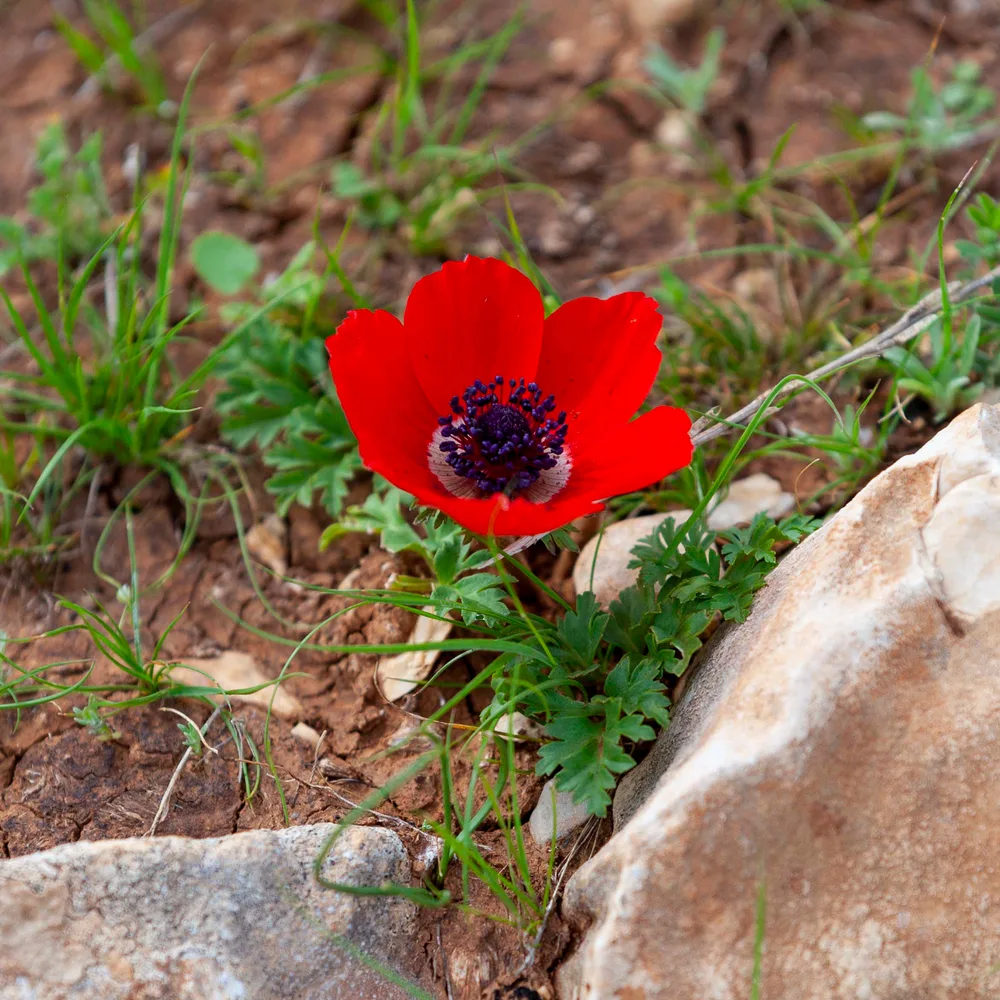
| April | نيسان · خميس | hannun, the month Canaan says it marks · orchid · saif al-ghurab, last month · kabbar opens | akkoub · za'atar · cyclamen leaf, last month |
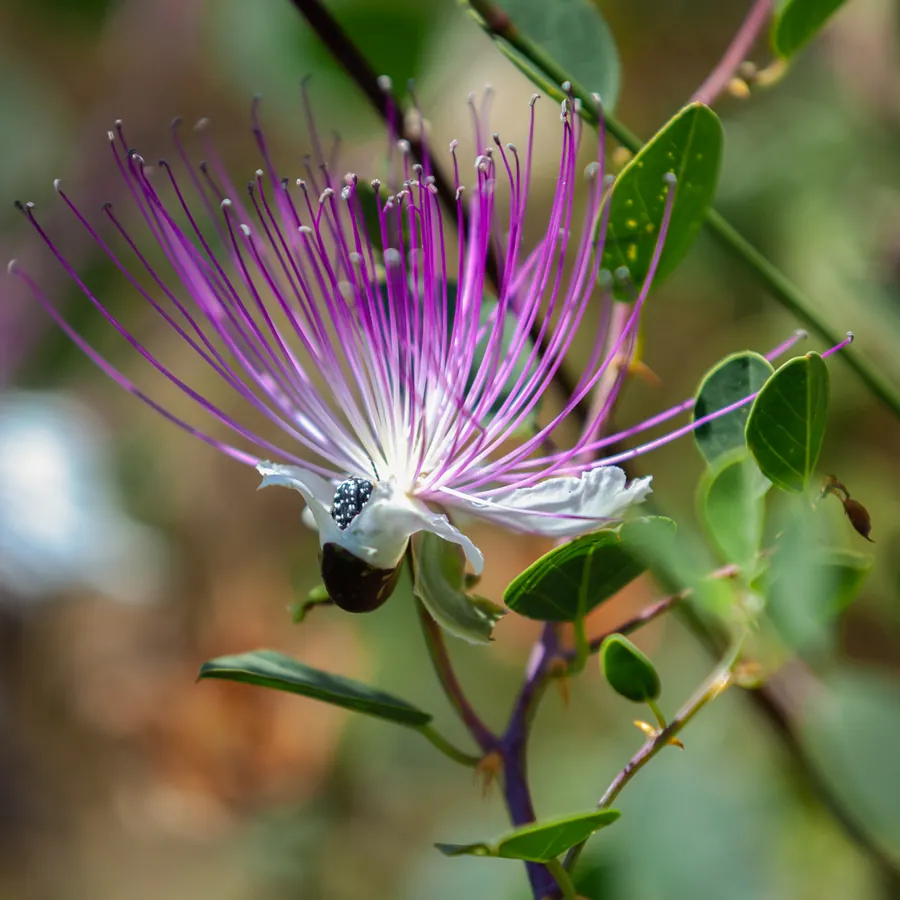
| May | أيار | orchid, last month · kabbar | kabbar buds · akkoub, last month |
| June | حزيران | kabbar · wild carrot | kabbar buds, last month |
| July | تموز | kabbar · wild carrot | shomar, from this month |
| August | آب | kabbar | sabr fruit · shomar |
| September | أيلول | kabbar, last month | sabr fruit · shomar. The Feast of the Cross turns the year on the 14th. |
| October | تشرين الأول | — | the olive harvest · shomar |
| November | تشرين الثاني | — | the olive harvest · shomar |
Two things fall out of reading it as a single year. The gathering season never really closes: something is being taken off the hillsides in all twelve months. And the busiest stretch, March to June, is exactly the stretch that contains the three plants people are prosecuted for gathering. Akkoub runs March to May. Za'atar and sage are spring plants. The enforcement campaign that the Israeli Nature and Parks Authority runs each March is timed to the same weeks.
07What breaks a calendar
A calendar like this only works for someone who can get to the hillside in the right week. Every entry in the table above is a place as much as a date.
That is why the olive column matters beyond the olive. In 2023, Israeli authorities cancelled almost all of the "prior coordination" approvals that let farmers reach groves near the Barrier and near colonies, and the agricultural gates stayed shut. More than 96,000 dunums went unharvested in October and November, the two months this table gives to the olive (Record 03).
The knowledge itself moves the same way. It transmits by walking to a specific hillside with someone older, in season, repeatedly, which is what the ethnobotanical surveys mean when they report that the practice is still alive but ageing (Record 06).
Canaan understood this in 1923 and again in 1928. He recorded the year in proverbs because the proverbs were the instrument, and he thought the instrument was about to be lost. He was writing about a working system, not a quaint one.
Sources
- T. Canaan, “Folklore of the Seasons in Palestine,” The Journal of the Palestine Oriental Society 3 (1923): 21–35 — the month names, the Feast of the Cross rhymes, and Khamis an-Nabat; read at source
- T. Canaan, “Plant-lore in Palestinian Superstition,” The Journal of the Palestine Oriental Society 8 (1928): 129–168 — the olive blossom and harvest rules, and the anemone as the April marker; read at source
- Palestinian Wild Food Plants — ed. Omar Imseeh Tesdell · Khalil Sakakini Cultural Centre and AFAC, 2018. Foraging months for shomar, cyclamen and akkoub.
- T. Canaan, review of Crowfoot and Baldensperger, From Cedar to Hyssop, JPOS 13 (1933): 174–175 — the February, March and August proverbs, the ploughing rule and the seed blessing, which Canaan notes are published there for the first time; read at source
- Stephan Hanna Stephan (1894–1949), “The Division of the Year in Palestine,” JPOS 2 (1922): 159–170 — خريف as a plant name, the agricultural year beginning with the first rain, and the bedouin month list; read at source. Palestinian, born Beit Jala, died a refugee in Lebanon — see the Jerusalem Circle.
- براري / Barari — flowering and foraging periods for the caper
- Flowering months for each species are given on its own record page, with that page's own sources.
- Every plant named on this calendar, in Arabic, English and Latin: the plant-names index.