الشومر
Nobody plants it and nobody guards it. It comes up along the edges of fields and roads, it is gathered by people who have always gathered it, and it is one of the plants Palestinian researchers are documenting before the last generation that knows it is gone.
Updated · 5 registers · 4 sources cited
Register 01What it is called
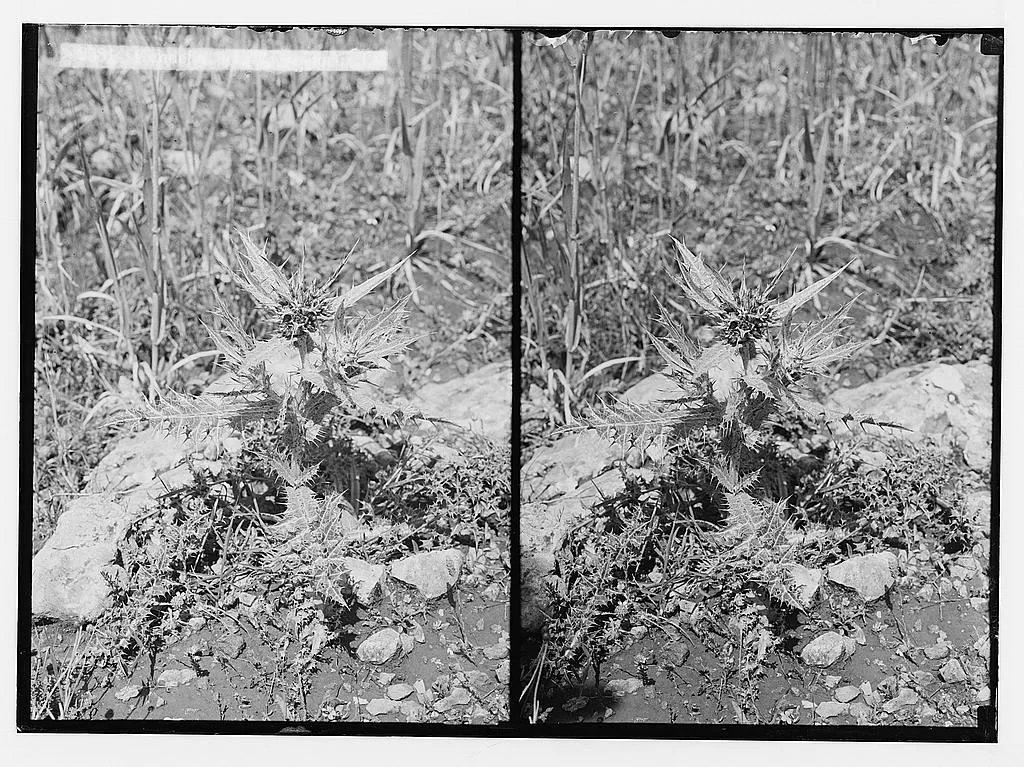
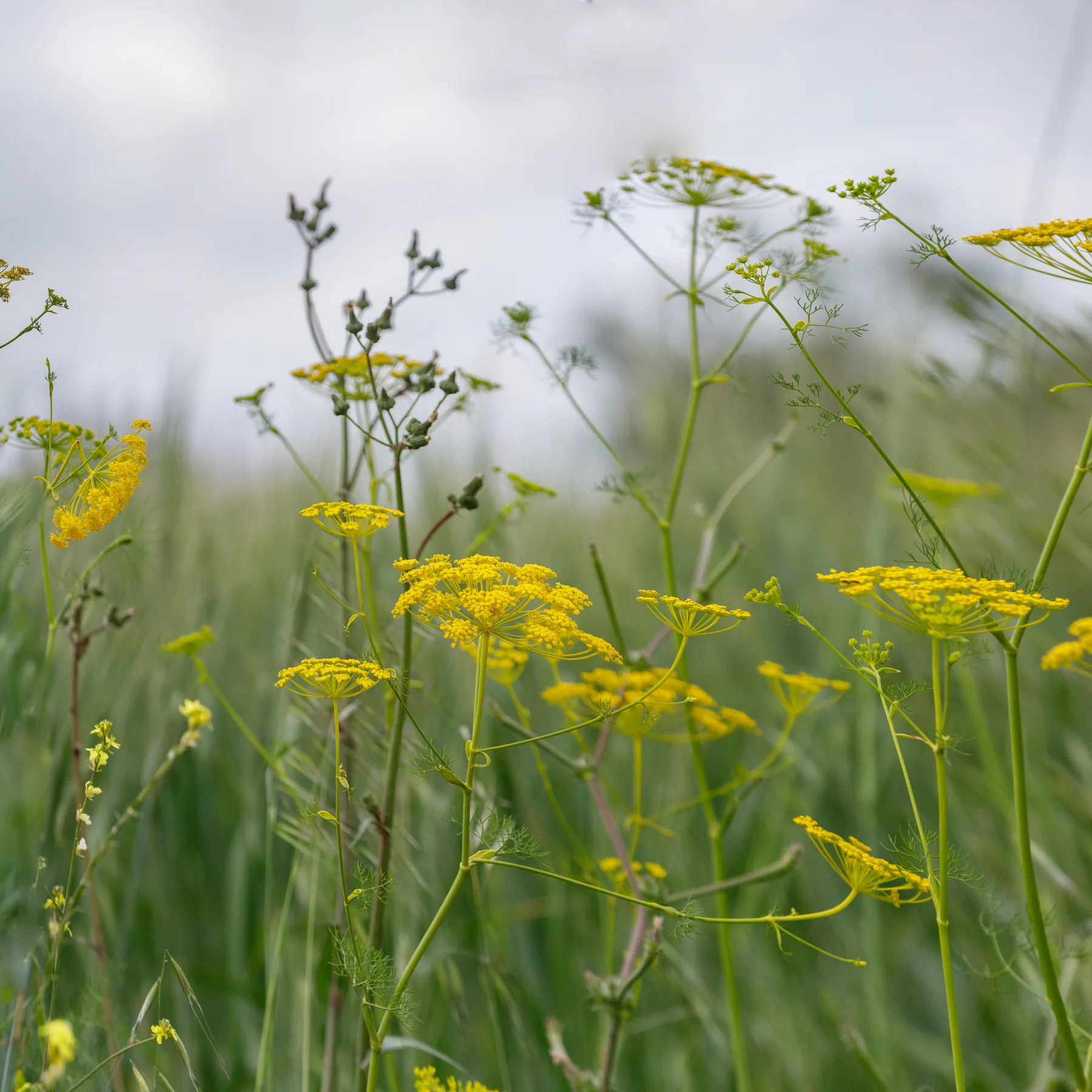
شومَر — shomar. The photograph at the top of this page reached this record under that name, written by the photographer, which is worth stating because a great many entries in this record are the other way round: a Latin binomial arriving first and an Arabic name recovered afterwards.
It is a tall perennial of the carrot family — hollow ribbed stems, foliage divided into fine thread-like segments, flat-topped umbels of small yellow flowers, and the aniseed smell that identifies it before you are close enough to see it properly. The 2018 Palestinian survey Palestinian Wild Food Plants lists it under the English gloss aniseed-weed, which is a fair description of both the scent and the status (Palestinian Wild Food Plants).
Register 02Where it grows
Shomar is a plant of edges. It comes up on field margins, along tracks and roadsides, on terrace risers, on waste ground and on the disturbed strips between one cultivated thing and the next. It grows in the parts of a landscape nobody has assigned to anything.
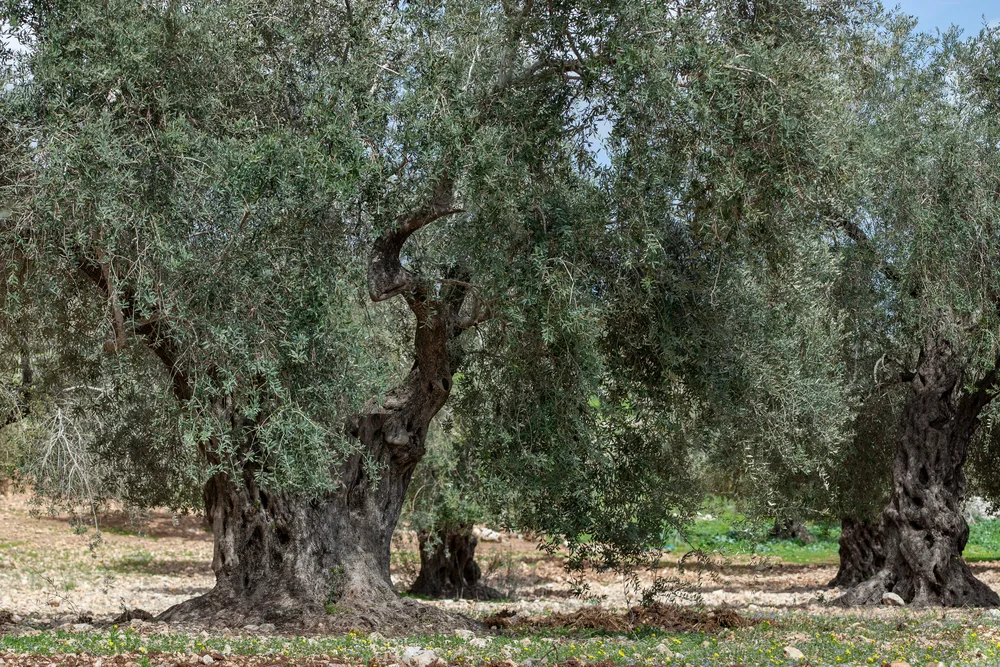
This is a category worth naming, because a large share of the Palestinian wild-food harvest comes from exactly there: not from farmland and not from wilderness, but from the seams. Field edges, olive terraces, hillsides above the last house. As the olive record notes, an olive terrace is a habitat, and much of what is gathered in Palestine is gathered from inside one.
Which is why access is the whole question. A plant that grows in the seams can only be gathered by someone permitted to walk in the seams.
Register 03At the table
The parts eaten are the stem and the leaf, and the gathering season runs from July into December (Palestinian Wild Food Plants) — late, and long, which makes shomar useful in a way the spring greens are not. The khubeizeh and the akkoub are finished by May. Shomar carries on into winter.
It is used as a flavouring more than a vegetable: chopped into cooked greens, into pastry fillings, into fish, into pickles and into bread. The ethnobotanical survey of the northern West Bank by Ali-Shtayeh and colleagues records it as a seasoning plant and places it among the small group of species used across all five districts they studied — Nablus, Jenin, Salfit, Qalqilia and Tulkarm (Journal of Ethnobiology and Ethnomedicine, 2008).
Register 04Still gathered, and ageing
The Ali-Shtayeh survey is worth reading as more than a species list. Between spring and summer 2006 the researchers interviewed 190 people across fifteen communities in those five districts, 138 of them women, average age 52, and recorded 100 wild edible plant species, 76 of which were named by three informants or more (Ali-Shtayeh et al., 2008).
That is an enormous living body of knowledge — a hundred species that people can find, identify, judge the season of, and cook. It is also, on the survey's own evidence, held disproportionately by older women. The paper's conclusion is blunt: the habit of using wild edible plants is still alive, but it is "aeging", and the younger generation "has lost the traditional knowledge necessary to identify, gather and process these species." Recording it, the authors write, is "pressing and fundamental."
It matters why a body of knowledge like this thins out, because "modernisation" is only part of it and is the least specific part. Knowledge of where a plant grows is knowledge of a particular hillside. It is transmitted by walking there with someone older, repeatedly, in season. Expulsion breaks that. So does a closure, a permit regime, a wall between a village and its terraces, or a grove that can now be reached only on scheduled days (see the olive record, Register 05).
You do not have to ban a plant to end the practice of gathering it. You only have to make the walk impossible for long enough.
Shomar itself is not restricted. Three of the plants gathered alongside it are, za'atar, akkoub and maryamiyya, and that is a separate register of this record.
Register 05Recorded
There is no American Colony plate of shomar. The Wild Flowers of Palestine series went after what a Western audience would find picturesque or biblical, anemones, cyclamen, orchids, thistles, and a roadside umbellifer that people cook with was not that.
The documentation of shomar is Palestinian, recent, and deliberate:
- Palestinian Wild Food Plants (2018), edited by the geographer Omar Imseeh Tesdell of Birzeit University and published by the Khalil Sakakini Cultural Centre with AFAC — a bilingual field record of roughly twenty-five gathered species, each with its Arabic names, the parts eaten and the foraging months.
- Barari (براري), an open-science platform built by the Makaneyyat research team in Palestine with support from the Palestinian American Research Center, publishing community-held knowledge about wild food plants species by species.
- The Biodiversity and Environmental Research Center (BERC) at Til, Nablus, and the ethnobotanical surveys of Ali-Shtayeh, Jamous and colleagues, which put numbers to what is gathered, by whom, and where.
The point of listing them is not bibliography. A plant is only "wild food" for as long as somebody can still name it, find it and cook it. Every one of those projects exists because Palestinians decided that the knowledge was going to be written down while the people who hold it are still here to be asked.
The photograph at the top of this page arrived labelled شومر. That is the same act, performed once, by one person, with a camera.
Sources
- Palestinian Wild Food Plants — النباتات البرية الصالحة للأكل — ed. Omar Imseeh Tesdell · Khalil Sakakini Cultural Centre and the Arab Fund for Arts and Culture (AFAC), 2018. Licensed CC BY-NC-ND; cited, not reproduced.
- Traditional knowledge of wild edible plants used in Palestine (Northern West Bank): a comparative study — M.S. Ali-Shtayeh, R.M. Jamous, J.H. Al-Shafie et al., Journal of Ethnobiology and Ethnomedicine 4:13, 12 May 2008
- براري / Barari — an open-science platform on wild food plants in Palestine — Makaneyyat research team, with support from the Palestinian American Research Center
- Biodiversity and Environmental Research Center (BERC) — Til, Nablus, Palestine