What wild greens do Palestinians gather?
Mallow first, then the cyclamen leaf, arum, dock and wild chicory. Of 190 people interviewed in the northern West Bank in 2006, خبيزة khubeza was named by 129, زعمطوط za'amtut by 99, لوف loof and حميض hummeid by 84 each, and هندباء hindbeh by 70. Most are picked between December and May.
الخبيزة والزعمطوط واللوف والحُمّيض والهندباء من أكثر الخضار البرّية ذكراً في مسح شمل ١٩٠ شخصاً في شمال الضفة الغربية عام ٢٠٠٦، وأغلبها يُجمع بين كانون الأول وأيار.
Published · 8 registers · 14 sources cited
01The short answer
Palestinians gather many wild greens, and some are named far more often than others. In spring and summer 2006, Palestinian researchers interviewed 190 people in fifteen communities in the northern West Bank. They recorded 100 wild plants used as food, in a study published in 2008 (Ali-Shtayeh et al., 2008).
- 129 of the 190 named خبيزة khubeza, mallow
- 99 named زعمطوط za'amtut, the cyclamen leaf
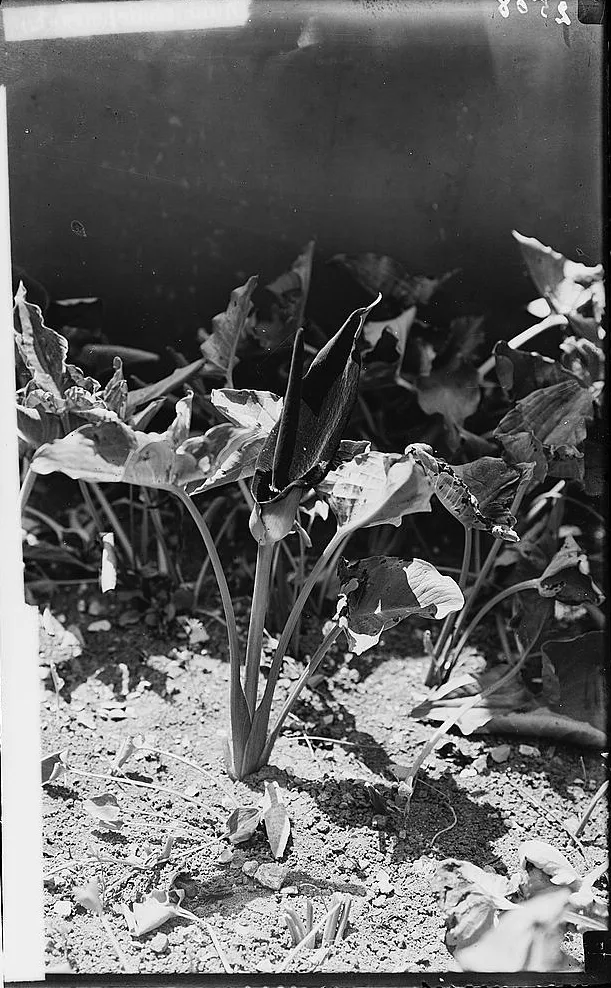
- 84 named لوف loof, Palestine arum
- 84 named حميض hummeid, dock or sorrel
- 70 named هندباء hindbeh, wild chicory
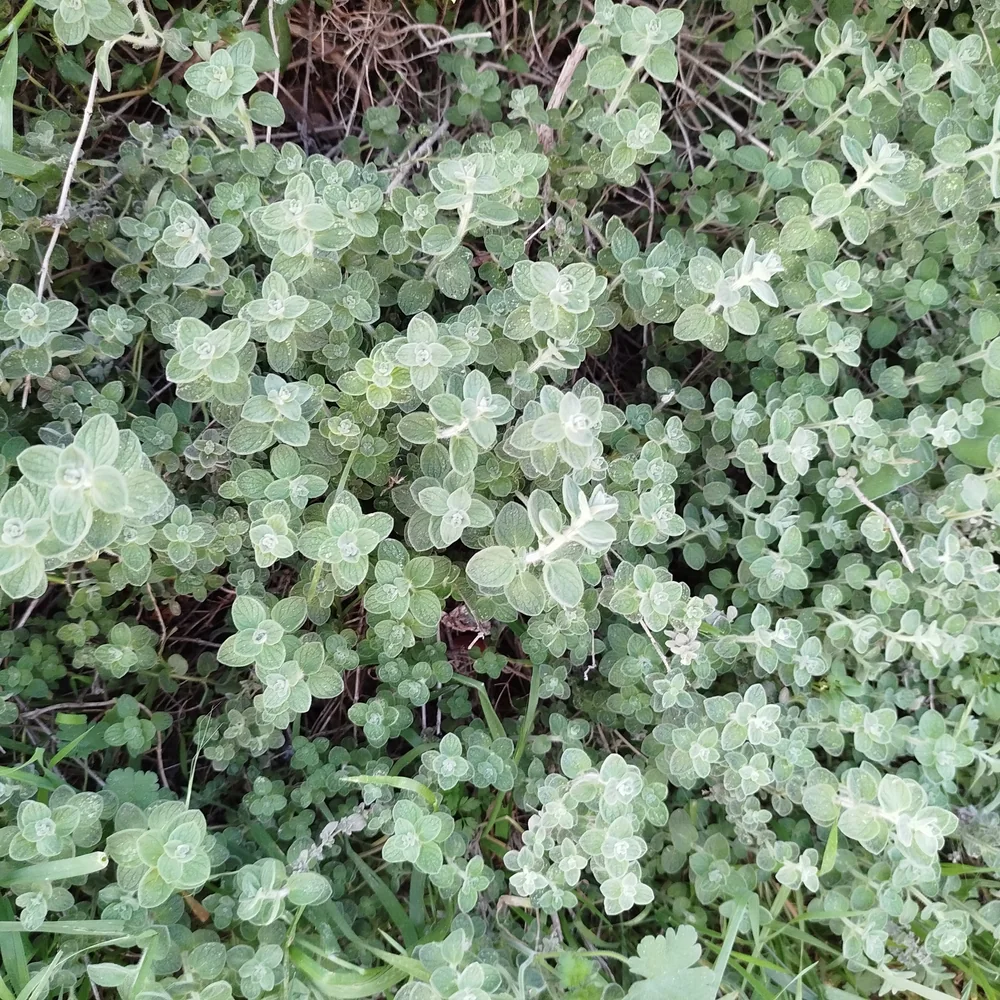
- 69 named لسّينة lisseineh, a wild sage whose leaves are stuffed
- 49 named بقلة baqleh, purslane, the one summer green
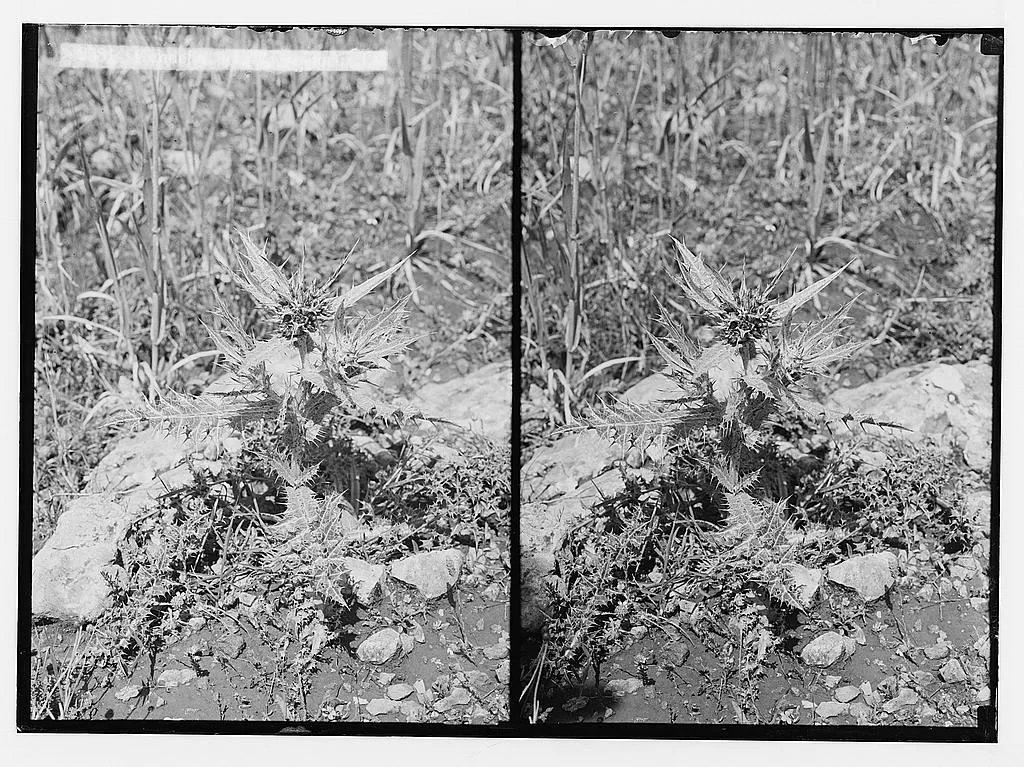
- 41 named خرفيش khurfeish, a thistle
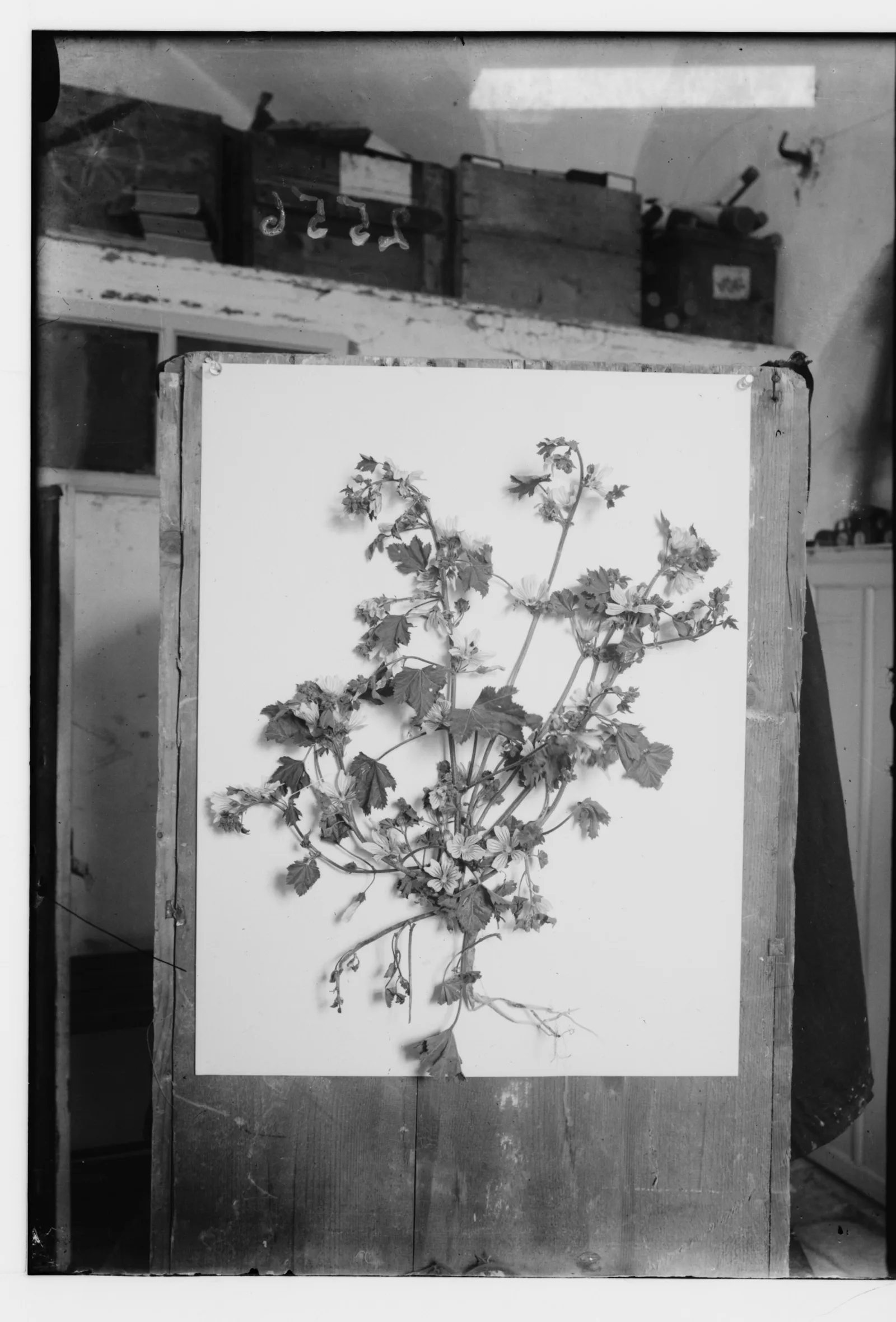
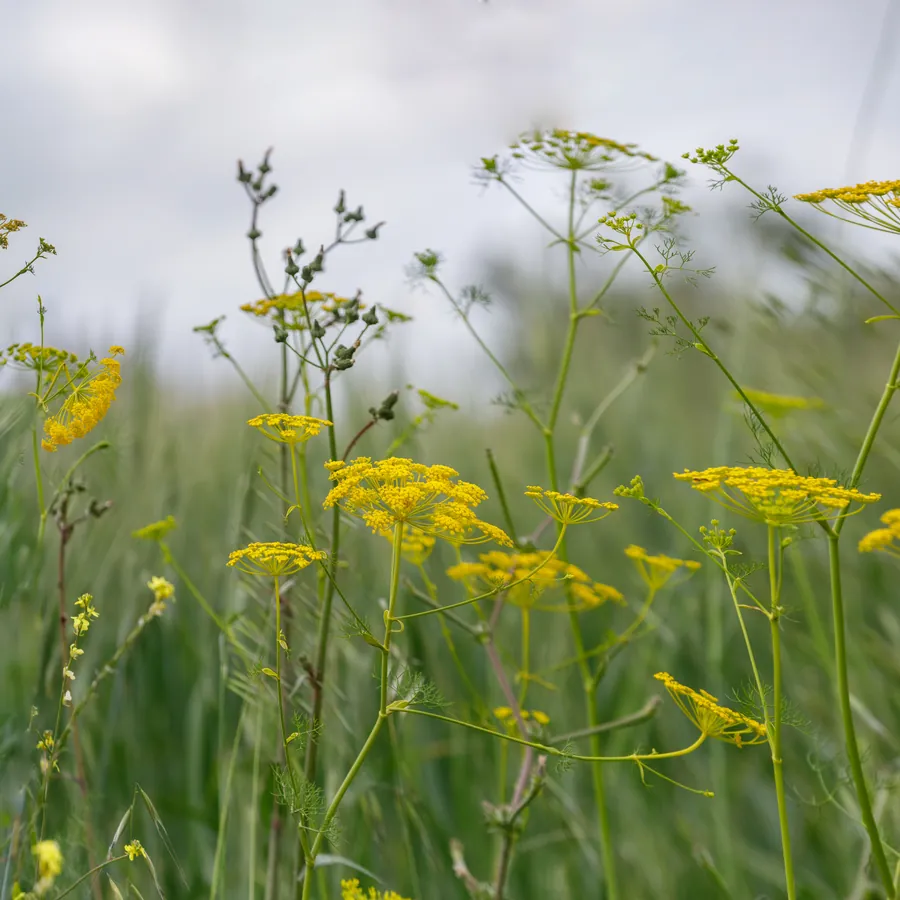
Mallow was named by two in three of the people interviewed, and arum and dock by more than two in five. Of the eleven wild food plants the survey found most used, five are eaten as leafy greens: mallow, the cyclamen leaf, arum, dock and fennel. Akkoub's young stems and flower heads make a sixth, and the rest are herbs and teas (Ali-Shtayeh et al., 2008; the count of greens is this record's).
They are winter and spring plants. The 2018 guide Palestinian Wild Food Plants gives mallow from January to April, chicory from February to April and arum in March and April (Tesdell et al., 2018). Purslane comes later, in the summer heat.
02Every name, in Arabic and English
The Arabic name comes first because it is the name. The botanical names are the main identifications in the sources, not every species that shares an Arabic name. Months are those of the 2018 guide unless marked.
| Arabic | Said as | In English | Botanical name | When | What is eaten |
|---|---|---|---|---|---|
| خُبّيزة ▶ | khubeza | mallow | Malva sylvestris, M. parviflora, M. pusilla | Jan–Apr | leaves |
| زعمطوط ▶ | za'amtut, the leaf of بخور مريم | cyclamen leaf | Cyclamen persicum | late Jan–Apr | leaves |
| لوف ▶ | loof, also dhan al-fil, “elephant's ear” | Palestine arum | Arum palaestinum | Mar–Apr | leaves, only after repeated boiling |
| حُمّيض ▶ | hummeid | dock, sorrel | Rumex spinosus, R. vesicarius, R. bucephalophorus | Jan–Mar | leaves |
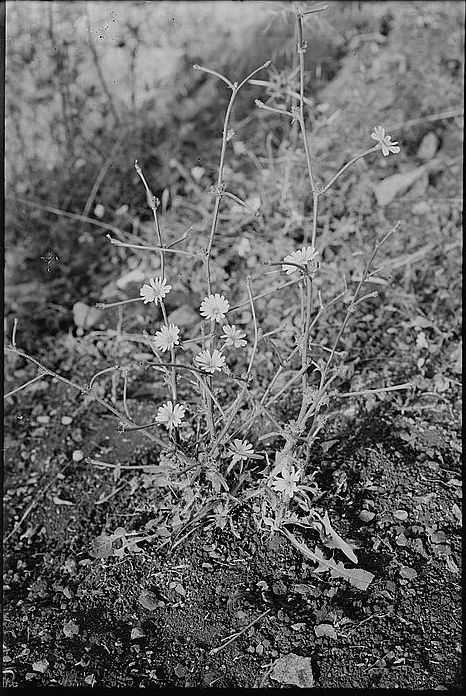
| هندباء ▶ | hindbeh | wild chicory | Cichorium intybus, C. pumilum | Feb–Apr | leaves, young stems |
| علت ▶ علك | 'ilt, 'ilik | wild chicory | Cichorium | Feb–Apr | leaves |
| لسّينة ▶ | lisseineh, lisan al-thor, “bull's tongue” | Jerusalem sage | Salvia hierosolymitana | Mar–May | leaves, stuffed and rolled |
| خرفيش ▶ | khurfeish | Syrian thistle, milk thistle | Notobasis syriaca, Silybum marianum | Dec–Feb, Notobasis; Jan, Silybum (Barari) | young leaves, midribs, stems |
| حويرنة ▶ | hweirneh, hwere | white wall-rocket, London rocket | Diplotaxis erucoides, Sisymbrium irio | Mar, Diplotaxis; Jan–Jun, Sisymbrium (Barari) | leaves, stems |
| لُفّيتة ▶ | luffeita | hoary mustard | Hirschfeldia incana | late Jan–early May | leaves, stems, flowers |
| مُرّار ▶ | murrar, “the bitter one” | star-thistle | Centaurea pallescens, C. dumulosa | Mar–May | stems |
| عكّوب ▶ | akkoub | gundelia | Gundelia tournefortii | Mar–May | flower head |
| بقلة ▶ رجلة ▶ فرفحينة ▶ | baqleh, rijleh, farfahina | purslane | Portulaca oleracea | May–Jun (Barari) | leaves, stems |
Sources for the table: the 2018 guide for months, parts and most Arabic spellings (Tesdell et al., 2018); the 2008 survey and the national checklists for the species (Ali-Shtayeh et al., 2008; Ali-Shtayeh, Jamous and Abuzaitoun, 2022); and Barari, the Palestinian open plant database, where marked (Barari). Where purslane goes by which name is set out in register 07.
03Hindbeh is chicory, not dandelion
The botanical and historical sources read for this page identify hindbeh as wild chicory, Cichorium. Tawfiq Canaan wrote it as “hindbeh (Cichorium Intybus L)” in 1928 (Canaan, 1928, p. 135). Grace Crowfoot and Louise Baldensperger, working around Artas near Bethlehem, give the same plant as 'elik or hindibe (Crowfoot and Baldensperger, 1932). The 2008 survey, the 2018 guide and a 2004 survey of Wadi Gaza all file it under Cichorium too. The 2018 guide also records the name for a wild lettuce, Lactuca tuberosa.
Dandelion has its own Palestinian name. Crowfoot and Baldensperger record it as salata el-ruhban, “Monks Salad”, and note that townspeople valued it more than villagers did. The 2026 national checklist gives the one native dandelion, Taraxacum cyprium, as سلاط الرهبان (Ali-Shtayeh, AbuZaitoun and Jamous, 2026). “Dandelion” is still a common English gloss for hindbeh, in Lebanese recipes and in some Palestinian writing, but the botanical sources cited here do not support it.
Which chicory is less settled. Canaan, the 1932 study and the 2018 guide say Cichorium intybus. The 2008 survey and the 2004 Gaza survey say C. pumilum, and neither national checklist lists C. intybus as native to the West Bank. This record gives both.
The plant has other names. The 2018 guide lists عِلِك and العقيدة beside هِندباء, and Barari records عِلْت 'ilt from a flora published in Tarshiha in the Galilee. Canaan compares clear blue eyes to chicory, and notes that its blue flowers come when other plants are withering.
04Loof is eaten only after the water is thrown away
Raw arum irritates the mouth, and loof is prepared by boiling it repeatedly and throwing the water away. The 2008 survey describes the method: “the leaves are cut, boiled and the water is decanted a few times to remove toxic substances, and then the leaves parts are fried using olive oil, and are garnished with lemon” (Ali-Shtayeh et al., 2008). The same survey records a belief that fried arum protects against colon cancer. That is recorded here as a belief. It is not a health claim.
The caution is old. Crowfoot and Baldensperger met a woman from Artas gathering arum leaves who said her own village would never eat them. She sold them in Beit Safafa, where, they were told, people poured hot water over the leaves many times and threw it away, and also rolled them like vine leaves (Crowfoot and Baldensperger, 1932).
The chemistry is documented. Arum leaves and seeds carry needle-shaped crystals of calcium oxalate that irritate the mouth, skin and gut. In 2017 a poison information centre recorded 53 exposures in children. Two in three had minor symptoms such as mouth irritation and drooling, and none was severe (Maree et al., 2020).
Folk names carry a warning too. Barari records مكحلة الغولة, “the ghoul's kohl pot”, among the plant's names. No named loof dish was found in the sources read for this page. The method above is how it is described.
05One name, several plants
Three of the greens are names for a kind of plant more than for one species.
- حُمّيض hummeid is a sour dock. The 2018 guide says it may mean Rumex spinosus, R. bucephalophorus or R. vesicarius; the 1932 study gives R. vesicarius and R. roseus. The 2008 survey recorded it as Rumex acetosa, common sorrel. That species is absent from both national checklists, and GBIF holds no record of it in Palestine, so this record treats that identification as doubtful and keeps the survey's count of 84 under the Arabic name.
- خرفيش khurfeish is a thistle eaten young. The 1932 study calls the milk thistle, Silybum marianum, the true khurfeish, recognisable by its white-veined leaves, and the Syrian thistle, Notobasis syriaca, the red one. The 2008 survey gives khurfeish as Notobasis. Canaan glosses the word as the wild artichoke, Cynara syriaca. Golden thistle, Scolymus, is often called khurfeish online. No source read here uses the name for it. They call it سنارية.
- حويرنة hweirneh is a wild rocket. The 2008 survey and the national checklists give white wall-rocket, Diplotaxis erucoides; in 1932 it was London rocket, Sisymbrium irio, in the Jerusalem market. Only 8 of the 190 people interviewed in 2006 named it.
Mallow is the same. Khubeza is given as Malva sylvestris in the 2008 survey, M. pusilla in the 2018 guide and M. parviflora in the Gaza survey of 2004. The 2022 checklist rates M. parviflora as more abundant than M. sylvestris in several West Bank districts, and does not list M. pusilla. The khubeza page has the full account.
06How they are cooked, and who sold them
- Mallow is cooked as a dish of its own or with rice. The 1932 study records it cooked in layers with rice, as khubbezi maqlubi or shakhtura.
- Dock fills sambusik, a pastry. The 2008 survey records the leaves as its filling; in the 1932 study village women bake it in dough with meat and onions, or on its own as fasting food.
- Jerusalem sage leaves are boiled, filled with rice and minced meat, rolled and cooked, then eaten with yoghurt. The dish carries the plant's name, lisseineh.
- Wild chicory is boiled and eaten as a salad with yoghurt, or fried in olive oil (Ali-Shtayeh et al., 2008).
- Hoary mustard is cooked and dressed with oil and lemon or vinegar. The 1932 study adds that people drank the bitter cooking water for their health.
- Thistles, wall-rocket and star-thistle are mostly eaten raw, as salad or picked and eaten in the field. In Jerusalem wall-rocket was used to flavour buttermilk.
- Purslane is eaten raw in salad or cooked.
In the 1932 account, women and girls gathered the greens and sold them. Girls from Artas sold them in Bethlehem and girls from al-Walaja in Jerusalem. Lisseineh was among the first spring greens in the Jerusalem market. On the day of the Samaritan Passover in April 1930, visitors climbing Mount Gerizim met women coming home from the upper pastures with its leaves, which they called liseini, “Little Tongues” (Crowfoot and Baldensperger, 1932).
The same study records a proverb about the thistle: the camel is satisfied only with khurfeish. It also records a song about mallow in which the poor promise to raise white banners to it “in the years of famine”.
07Gaza
Purslane has a Gaza name. The 2008 survey found بقلة baqleh in the northern West Bank. The 2004 survey of Wadi Gaza gives بقلة, رجلة and فرفحينا, and marks it as food (Abd Rabou et al., 2008). The Gaza Kitchen calls the stew rijliya and records a woman remembering that people lived on purslane while hiding during the flight of 1948 (El-Haddad and Schmitt). Barari also records farfahina, without saying where it is used. Which name belongs to which region is not mapped in any source read here.
The same Wadi Gaza survey marks dwarf chicory, least mallow and a dock, حمصيص (Rumex pictus), as food.
In the sources read for this page, khubeza is the only one of these greens documented as famine food in Gaza since 2023. In February 2024 Al Jazeera described families in Jabalia living on water and boiled khubeza (al-Banna, 2024). A month later a woman in the same camp told Reuters that they had never eaten it before, even in earlier wars (Reuters, 2024). This record found no reporting that ties the other greens on this page to the famine, and does not assume it. Whether akkoub grows in Gaza at all is its own question.
08Which of them is protected
Of the greens on this page, two are on the 2005 list of protected plants: akkoub and the cyclamen, the Israeli declaration of protected natural assets, enforced inside Israel and extended into the occupied West Bank through the Civil Administration. This record checked every plant here against the schedule (Protected Natural Assets declaration, 2005, unofficial translation). Mallow, arum, dock, chicory, the thistles, the rockets, Jerusalem sage, hoary mustard, star-thistle and purslane are not on it. The cyclamen is listed as a protected flower; this record has found no prosecution for picking its leaves.
The prosecutions this record has documented are for akkoub and for two herbs, za'atar and maramia, from court records that are not complete. How the ban has been enforced, and against whom, is on Under the Law.
Sources
- M. S. Ali-Shtayeh, R. M. Jamous, J. H. Al-Shafie' et al., “Traditional knowledge of wild edible plants used in Palestine (Northern West Bank): a comparative study,” Journal of Ethnobiology and Ethnomedicine 4: 13 (2008) — 190 informants, 15 communities, 100 species; Additional files 1 and 2 read for the informant counts, parts and preparation. Palestinian-authored (An-Najah; BERC, Til).
- Omar Imseeh Tesdell (ed.), with Amna Othman, Yusra Othman, Yara Dowani and others, Palestinian Wild Food Plants / النباتات البرية الغذائية الفلسطينية, Khalil Sakakini Cultural Centre (2018) — a guide to 25 plants built from field walks at Deir Ballut and Wadi al-Dilb and a naming workshop; Arabic names, months and parts. Palestinian-authored.
- Grace M. Crowfoot and Louise Baldensperger, From Cedar to Hyssop: A Study in the Folklore of Plants in Palestine, London: Sheldon Press (1932), chapter III, “Wild Foods” — fieldwork centred on Artas; read from a transcription, paraphrased here.
- T. Canaan, “Plant-lore in Palestinian superstition,” Journal of the Palestine Oriental Society 8: 129–168 (1928) — hindbeh as Cichorium intybus, p. 135; the chicory simile, p. 144; khurfeish, p. 146. Palestinian author.
- M. S. Ali-Shtayeh, R. M. Jamous, S. Y. Abuzaitoun, “Analysis of floristic composition and species diversity of vascular plants native to the State of Palestine (West Bank and Gaza Strip),” Biodiversity Data Journal 10: e80427 (2022) — the national checklist and its spreadsheet: Arabic names, abundance by district. Palestinian-authored.
- M. S. Ali-Shtayeh, S. Y. AbuZaitoun and R. M. Jamous, “An updated checklist of the vascular flora native to the State of Palestine – West Bank,” Biodiversity Data Journal 14: e188380 (2026) — Taraxacum cyprium, سلاط الرهبان; the chicory filed as C. endivia. Palestinian-authored.
- Barari, open plant database (Makaneyyat / PARC) — Arabic names with their sources, including عِلْت and مكحلة الغولة; forage months where marked. Palestinian.
- A. Maree, S. Hashavya, I. Gross, Y. Asaf, Y. Bentur, “Arum palaestinum poisoning: revenge of the witch,” European Journal of Pediatrics (2020) — oxalate crystals; 53 child exposures in 2017, none severe.
- A. N. Abd Rabou et al., “Notes on some common flora and its uses in Wadi Gaza, Gaza Strip,” Islamic University Journal (Natural Studies and Engineering) 16(1): 31–63 (2008) — spring 2004; purslane, dwarf chicory, least mallow and Rumex pictus marked as food. Palestinian-authored.
- Laila El-Haddad and Maggie Schmitt, The Gaza Kitchen, recipe for purslane stew, rijliya — read as a single recipe, not the whole book.
- ياسر البنا، «الماء والخُبيزة.. غذاء من لم يمت من عائلات شمال غزة»، الجزيرة نت، ٢٧ فبراير ٢٠٢٤ — Jabalia, reported from Gaza.
- Reuters, “Gaza's hungry eat wild plant with no aid relief in sight,” via Asharq Al-Awsat (25 March 2024)
- National Parks, Nature Reserves, National Sites and Memorial Sites (Protected Natural Assets) Declaration, 5765-2005, unofficial English translation, FAOLEX — the schedule checked for every plant on this page: Gundelia tournefortii and Cyclamen persicum are listed.
- Library of Congress, matpc.00180 and matpc.02455 — the arum and chicory plates from the American Colony's “Wild flowers of Palestine” series, public domain. The series itself is counted on the Wild Flowers of Palestine page.