What is khubeza?
Khubeza is wild mallow, and its name comes from bread. خبيزة shares a root with خبز, khubz. It is a common spring green, cooked with onion and olive oil, and it is what people eat when there is nothing else.
Updated · 5 registers · 10 sources cited
01The short answer
Khubeza is خبيزة, wild mallow. The plant most often meant is Malva sylvestris, a soft-leaved plant of the Malvaceae with rounded, shallowly lobed leaves and small pink or mauve flowers veined in darker purple. It grows on waste ground, field margins, roadsides and the edges of villages, and it comes up with the winter rain.
The leaves are the part eaten. They are picked young, before the plant runs to seed, and they are cooked rather than eaten raw. Khubeza is not a delicacy and was never sold as one. It grows where people already are, it costs nothing, and it arrives in the hungriest part of the year, between the end of the stored harvest and the first of the new one.
The Arabic name is doing work. خبيزة is built on the same root as خبز, khubz, bread. Whether the name came from the flat round seed capsules, which look like small loaves, or from the plant's role as food of last resort, Palestinians have heard bread in the word for a long time.
02Canaan wrote down what it meant in 1928
The Palestinian physician Tawfiq Canaan included a table of dream meanings in his 1928 study of Palestinian plant lore, with a column giving the reason for each. The mallow entry is four words wide and settles the etymology question from inside the language.
| Plant | Arabic | As Canaan wrote it | What dreaming of it means | Canaan's reason |
|---|---|---|---|---|
| Bread | خبز | khubz | Long life, richness | ‘āsha, to live |
| Mallow | خبيزة | ḥubbézeh | Daily living | khubz, bread |
| Olives | زيتون | zētūn | Light, hope | Superstition |
| Rice | رز | ruzz | Bad luck, misfortune | rāziyeh, misfortune |
To dream of mallow meant daily living, and Canaan's stated reason is the word for bread. The connection is not a modern folk etymology. A Palestinian doctor recorded it in Jerusalem in 1928, from the villages he practised in, and printed his reasoning beside it (Canaan, JPOS 8, 1928, p. 164).
He also recorded when to eat it. A proverb in the same paper: el-ḥubbēzeh auwalha sharbeh u akhirha ḍarbeh, the first mallows work like a purge and the last ones are a scourge. Take it early in the season.
03Which mallow, exactly
The name covers more than one plant, and this record will not pretend otherwise.
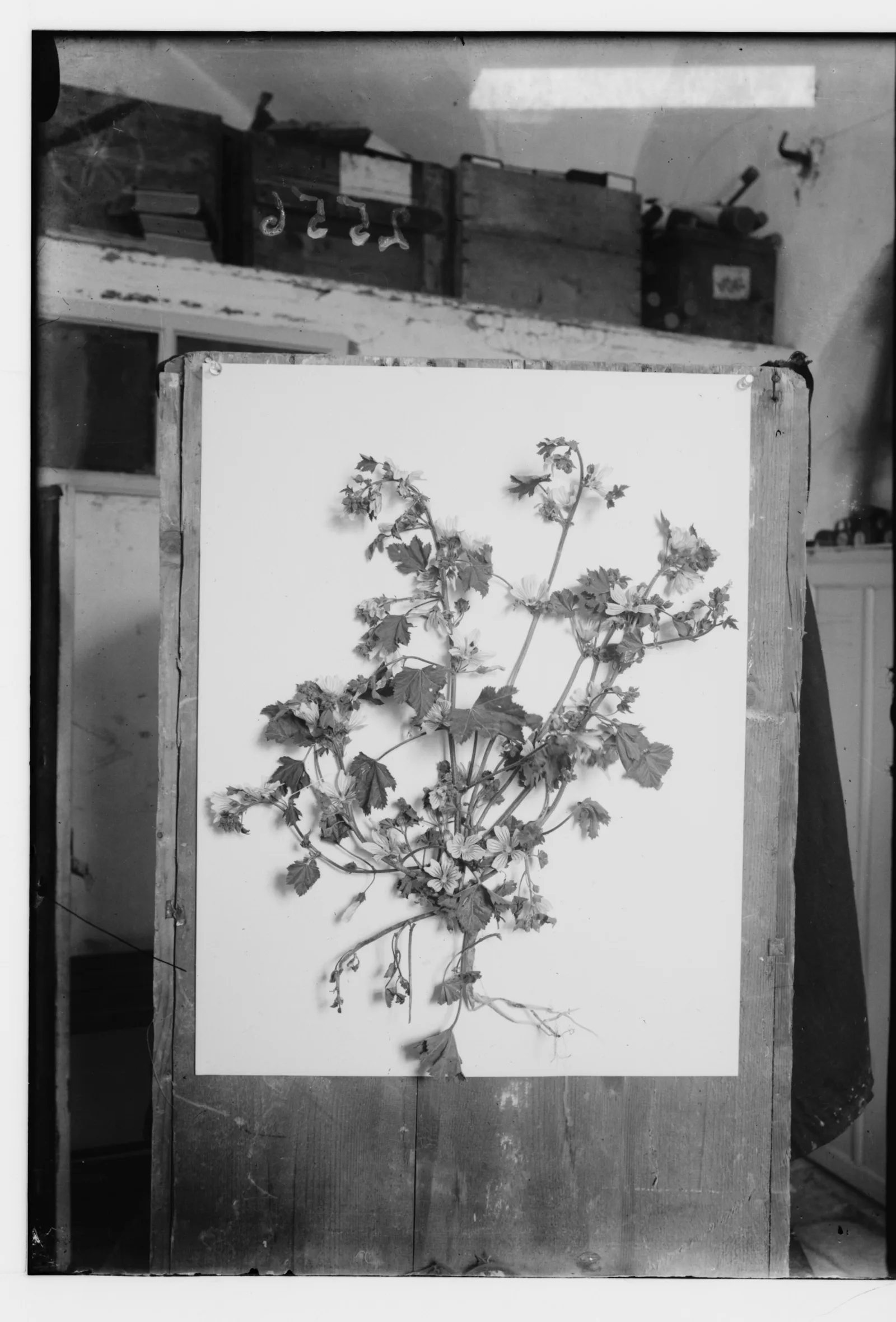
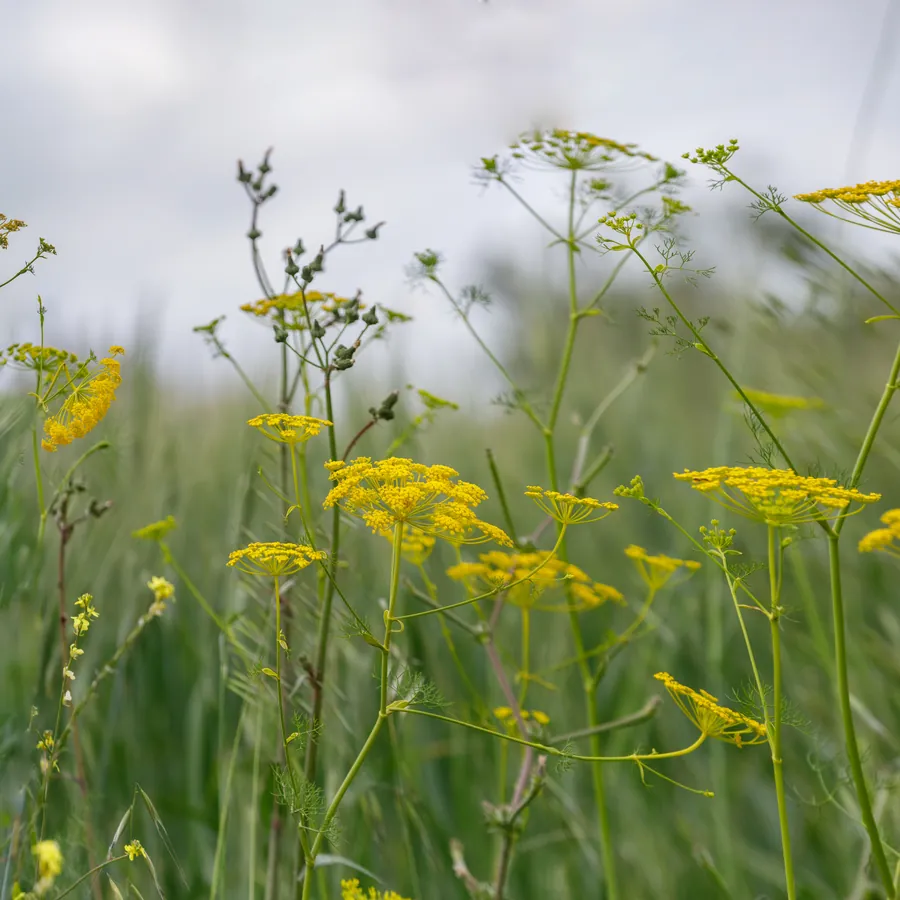
English-language sources and modern Palestinian ethnobotany generally give khubeza as Malva sylvestris, and the 1900 plate above is captioned with that name. Canaan, writing in 1928, footnoted his ḥubbēzeh as Lavatera cretica, a different mallow in the same family. Several small-flowered mallows grow in the same ground, including Malva parviflora, and all of them are gathered and cooked the same way.
One Arabic name, several species, one dish. The plant was named for what it does in a kitchen, not for where it sits in a key.
This is the ordinary condition of a working plant name, and it is worth stating rather than resolving. A botanical key sorts by flower parts. A village name sorts by whether the leaves are soft enough to cook in March. Those two systems do not have to agree, and collapsing the Arabic name onto a single binomial would lose information rather than add it.
04How much of the country eats it
In 2006 a team led by the Palestinian botanist Mohammed S. Ali-Shtayeh interviewed 190 people across fifteen communities in five districts of the northern West Bank and recorded 100 wild edible plant species.
Khubeza came third of the hundred. Malva sylvestris was named by 129 of the 190 people, behind za'atar at 150 and maramia at 131, and ahead of cyclamen and akkoub at 99 each (Ali-Shtayeh et al., 2008).
Khubeza is not one of the three plants prosecuted under the protected-plants designations. Za'atar, akkoub and maramia are; mallow is not. What that pattern of enforcement looks like, and who it falls on, is set out on Under the Law.
The usual preparation is simple. Leaves are stripped from the stems, washed, chopped and stewed down with onion and olive oil, sometimes with garlic and lemon, and eaten with bread. In Gaza the leaves also go into sumaqiyya in place of chard.
05The plant people eat when there is nothing
Khubeza has carried a second meaning for as long as it has been recorded, and the meaning is hunger.
Canaan collected a fable in which the mallow complains to the broad bean about how thoroughly it is picked: “they have uprooted me completely, and not a single root have they left standing.” That was published in 1928, and it describes gathering pressure on a plant that people turn to when other food is short.
In Gaza, khubeza has been eaten through famine. During the war that began in October 2023, with food supply collapsing, residents gathered mallow from roadsides, rubble and any open ground and cooked it as a staple. UN experts declared in July 2024 that famine had spread throughout the Gaza Strip (OHCHR). Reporting from that period describes khubeza being sold and shared where flour was unavailable.
A plant whose name means bread became, for a while, the thing people ate in place of bread.
This record states that as fact and attributes it. The famine determination belongs to the United Nations experts who made it; the gathering is documented in contemporary reporting. Neither claim needs a modifier from this site to carry weight.
Sources
- T. Canaan, “Plant-lore in Palestinian Superstition,” JPOS 8 (1928): 129–168 — the dream table on p. 164 giving ḥubbēzeh → “daily living,” reason khubz, bread; the seasonal proverb; the mallow-and-bean fable; and the footnote identifying his mallow as Lavatera cretica. Read at source. Palestinian-authored — see the Jerusalem Circle.
- M. S. Ali-Shtayeh, R. M. Jamous, J. H. Al-Shafie‘ et al., “Traditional knowledge of wild edible plants used in Palestine (Northern West Bank),” J. Ethnobiol. Ethnomed. 4:13 (2008) — the 129-of-190 count and the ranking. An-Najah University and BERC, Til, Nablus. Palestinian-authored.
- “UN experts declare famine has spread throughout Gaza strip,” OHCHR, July 2024 — the famine determination cited in Register 05, attributed to the experts who made it
- Malva sylvestris L. — GBIF 3152374 — accepted name, family Malvaceae; verified via api.gbif.org
- Plants of the World Online — Malva sylvestris — Royal Botanic Gardens, Kew
- Malva sylvestris — Wikidata Q156835 — entity identifiers and the Arabic label خبازة برية; cross-checked against GBIF, POWO and iNaturalist
- “Wood-mallow (Malva sylvestris L.),” LOC matpc.02428 — American Colony Photo Department, c. 1900–1920; public domain, via the Wikimedia Commons mirror
- The 1900 survey this plate belongs to, and what it left out, are counted on Wild Flowers of Palestine.
- The protected-plants instrument and the enforcement record are on Under the Law; the wider list of gathered species on Edible.
- خبيزة and every other plant name in this record, Arabic to English and back: the plant-names index.
_LOC_matpc.02428.jpg)