الجزر البرّي
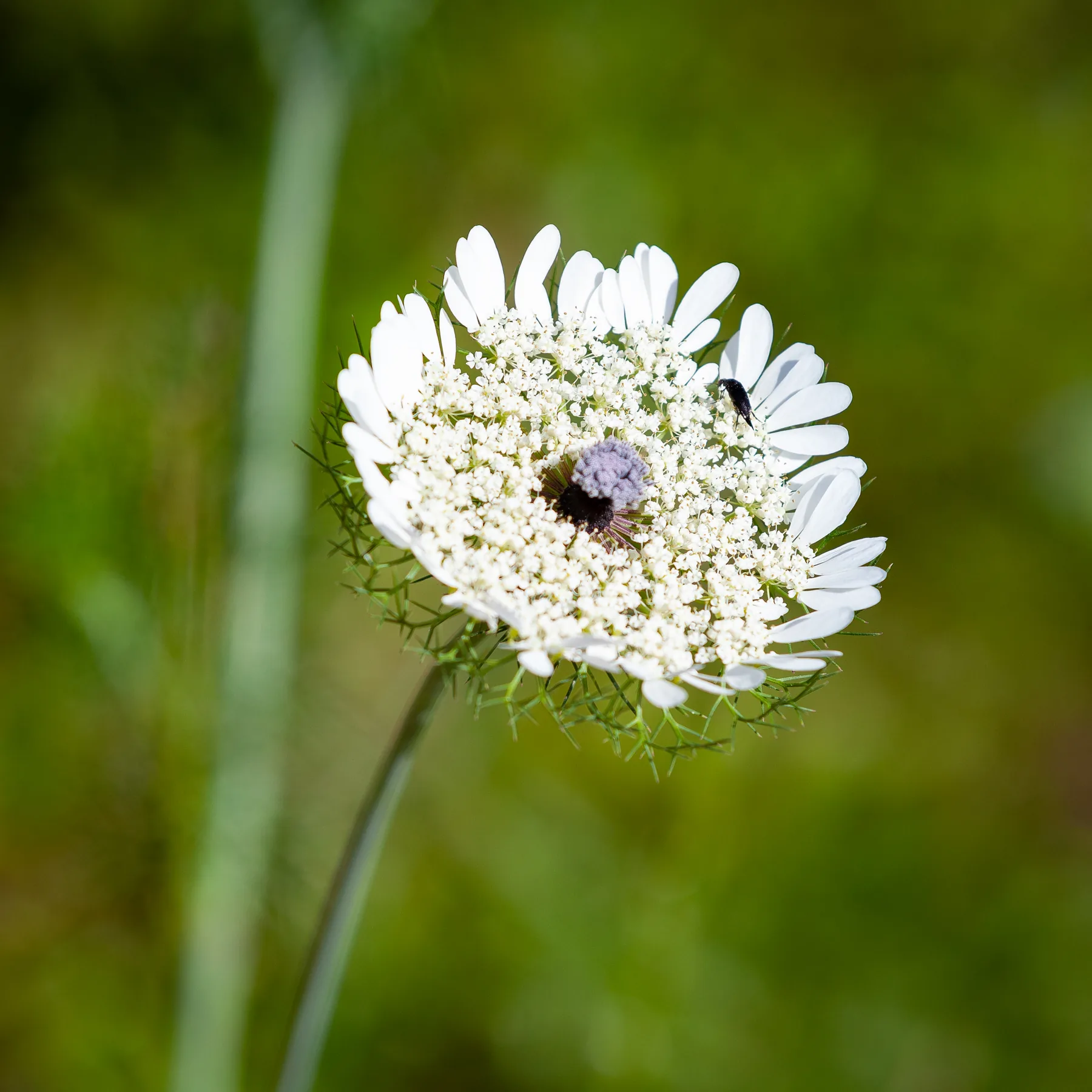
Every carrot grown anywhere on earth descends from this plant. It is still here, on the edge of the field, unimproved and unbothered, with one dead-black flower at the centre of a white plate.
Updated · 5 registers · 3 sources cited
Register 01What it is called
الجزر البرّي — jazar barri, the wild carrot. جزر is simply carrot; برّي is the word this record keeps meeting — of the wild, uncultivated — the same modifier that turns za'atar into wild za'atar and lettuce into خس برّي.
In English it is usually called Queen Anne's lace, after an eighteenth-century English queen and a European textile. That name is doing a lot of work. A plant that grows from Palestine to Iran, and that gave the world its carrot, filed under the needlework of a foreign court.
A note on the species. Daucus is well represented in Palestine and the American Colony's own plates from around 1900 name two different ones — D. maximus and D. aureus. The plant photographed here shows the features that mark D. carota: the flattened compound umbel, the enlarged outer florets forming a ragged rim, and the single dark red-black flower sitting alone at the centre. This record names it on that basis and will correct it if a botanist says otherwise.
Register 02Where it grows
Like the shomar, this is a plant of the seams — field margins, roadsides, fallow ground, the disturbed strip between one cultivated thing and the next. It is a biennial: a flat rosette and a root in the first year, then the tall branching flower stem in the second.
It is not listed among the twenty-five species in the 2018 Palestinian wild-food survey, and this record has not found a Palestinian source recording it as a gathered food. That is stated rather than glossed over: the absence of a plant from that list is itself information, and inventing a foraging tradition for it would be exactly the kind of thing this record's method exists to prevent.
Register 03The one dark flower
The umbel is a compound structure: dozens of small clusters, each of dozens of tiny white flowers, all held out on spokes into a single flat plate. The florets around the rim are enlarged and lopsided, throwing their biggest petals outward, so that the whole assembly reads to an approaching insect as one large flower rather than a thousand small ones.
And then, at the dead centre, one flower is deep red-black. It is sterile. It does nothing.
A plate of white flowers, and in the middle of it, a single dark one that does not reproduce. Nobody has fully settled what it is for.
The leading explanation is that it mimics an insect already feeding — a decoy that says somebody is here, it is safe, land. It has also been argued to do nothing at all and simply to persist. Either way it is the most reliable way to know this plant on sight, and it is why the photograph at the top of this page is the one that identifies it.
When flowering is over the spokes fold upward and inward and the whole plate closes into a tight concave cage — the bird's nest, which is the plant's other common name in several languages, and which is what the dark seed heads in the archival photograph below actually are.
Register 04The root, and the warning
This is the wild ancestor of the cultivated carrot — the same species, undomesticated. Its root is pale, thin, tough and strongly aromatic rather than orange and sweet; everything familiar about a supermarket carrot is the product of selection carried out on this plant over a very long time by people who kept the ones they liked.
Which is a useful thing to hold next to the rest of this record. The baladi olive varieties, the five distinct za'atars, the wild edible hundred — all of it is the same process, running continuously, in the same landscape, in the hands of the people who live there.
Register 05Photographed before
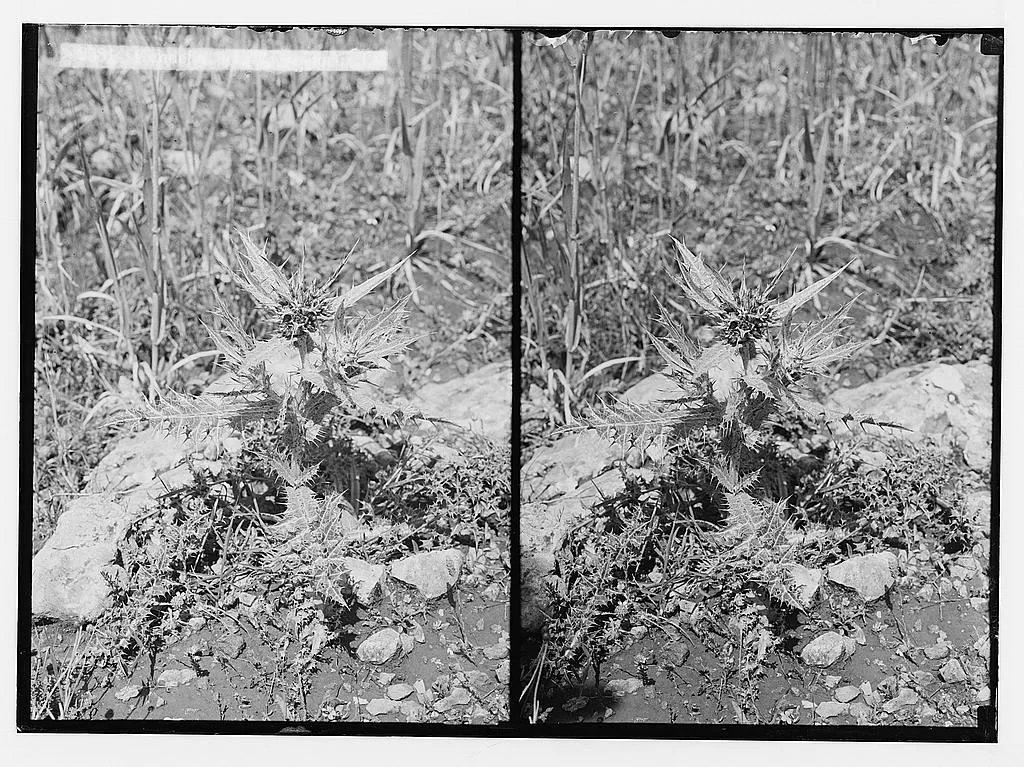
The American Colony Photo Department photographed the wild carrot around 1900 for its Wild Flowers of Palestine series, and filed it as “Great carrot (Daucus maximus Desf.)”.
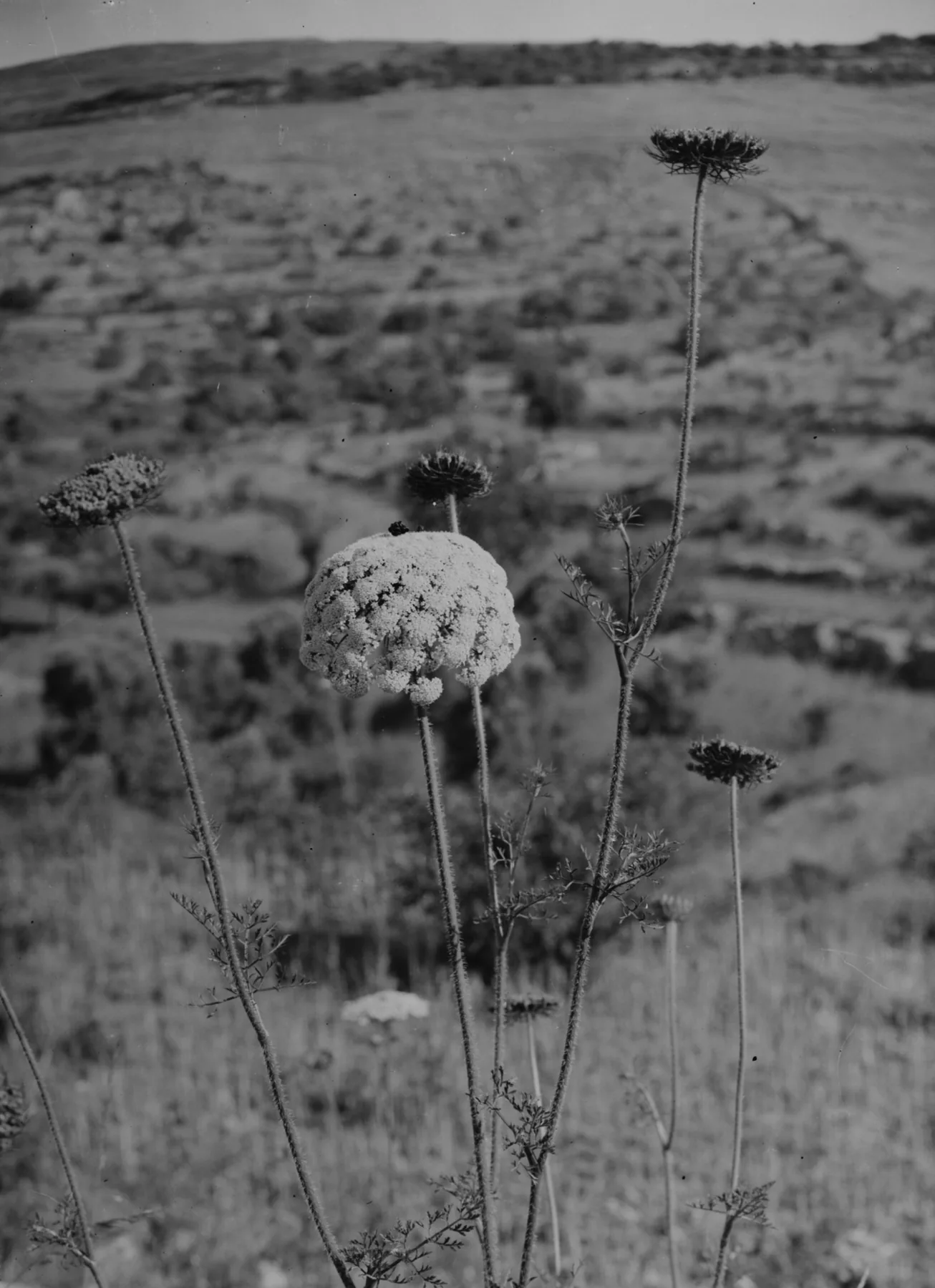
Library of Congress, Matson Collection, matpc.02433 · public domain · one half of a stereograph pair
Note what is actually in that frame. Not a specimen: a plant standing where it grew, one umbel open, several already folded into their nests, and behind it a Palestinian hillside with the terrace lines running across it.
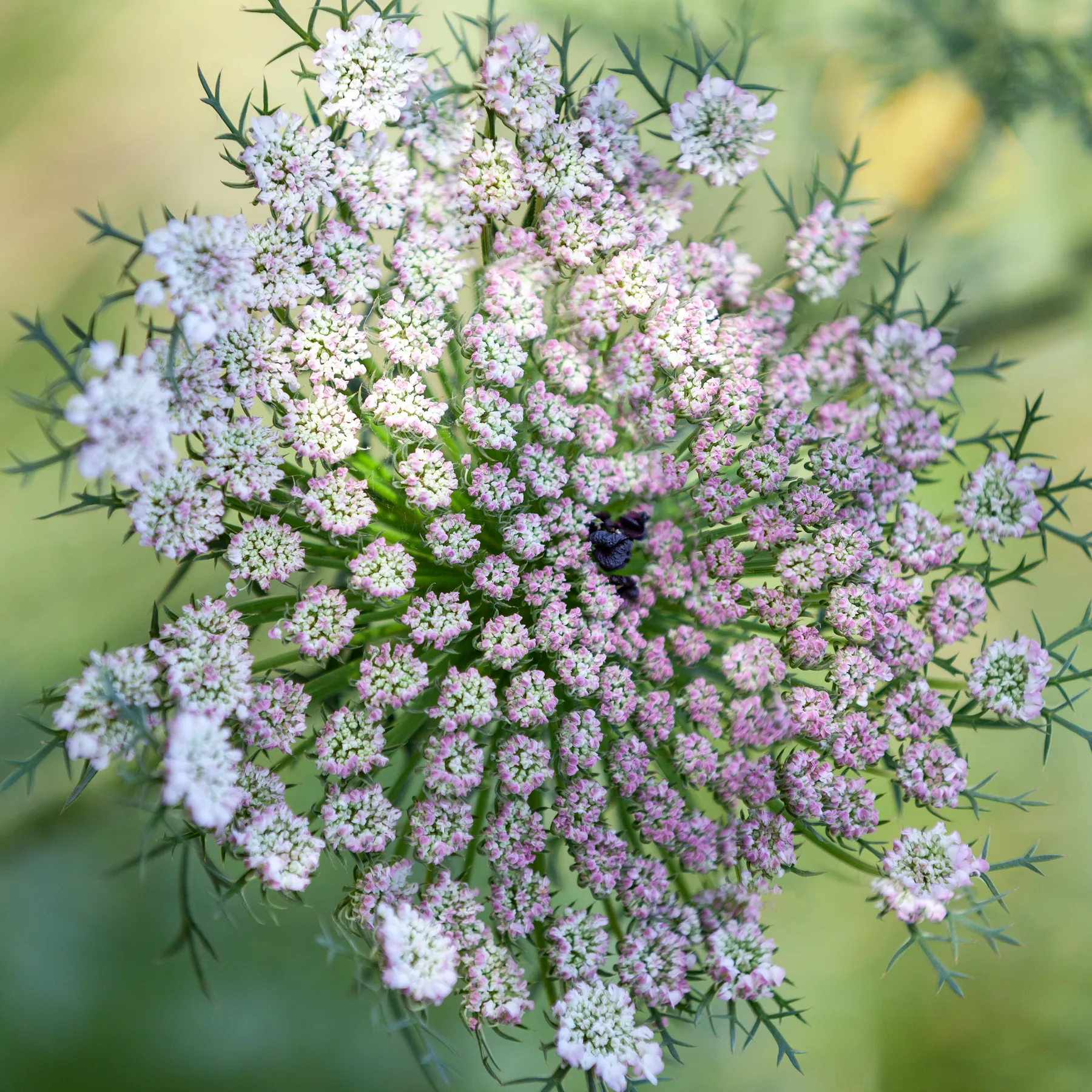
Now set it beside the photograph at the top of this page, and beside this one, which is the same species cut and laid out flat against black:
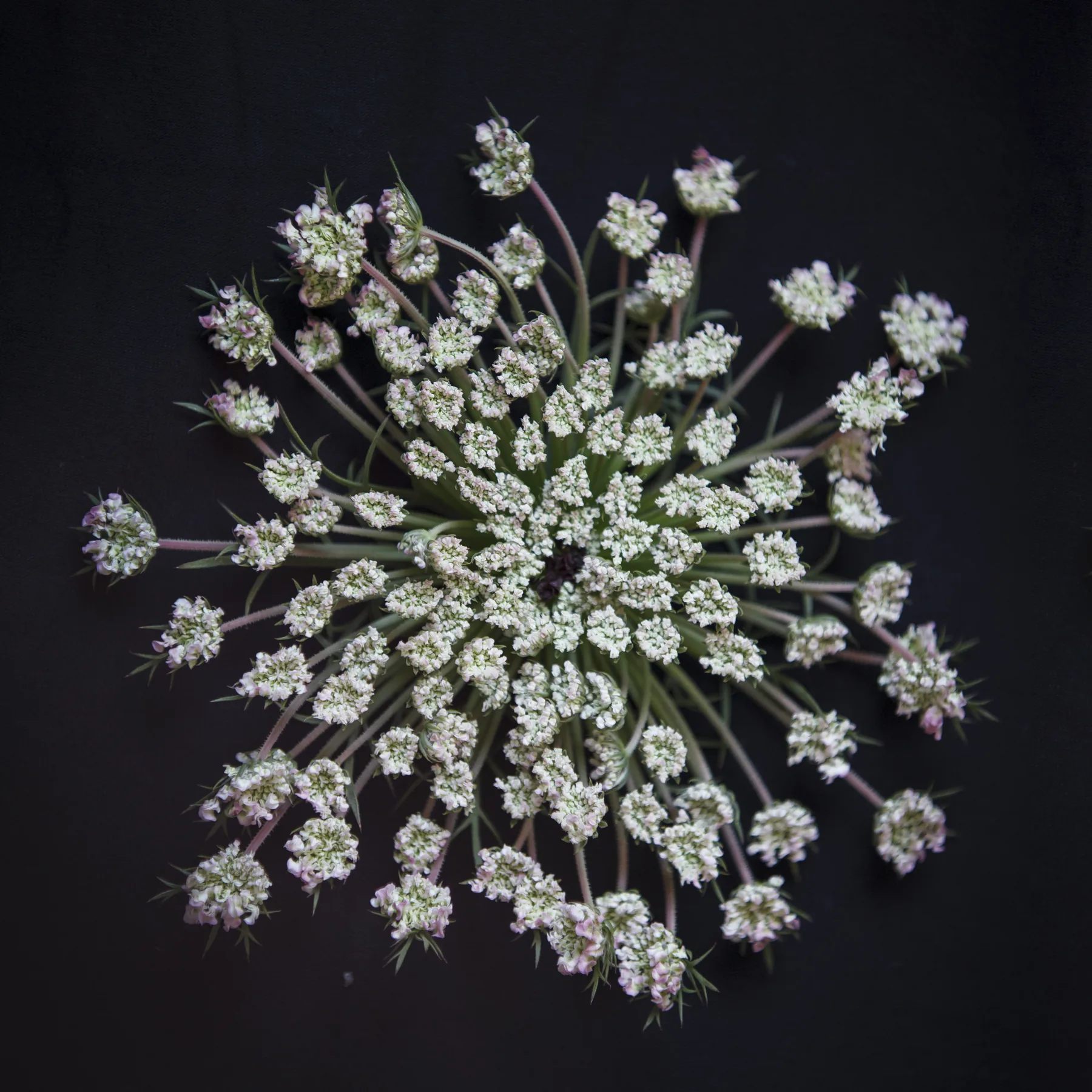
The two roles have swapped. On the hannun and the cyclamen, the American Colony made the studio specimen and the contemporary photographer went to the hillside. Here it is the other way round: the 1900 plate is the field study, and the specimen on black is the recent one.
Which settles what the archival register on this site has been circling. The difference between the two bodies of work was never the method. Both photographers shot specimens and both went to the field.
The difference is the filing. One set was made for a Western market that wanted a Holy Land and captioned accordingly — the anemone as a Lily of the field, the caper under a Latin binomial, the carrot under an English queen's needlework. The other is being made by someone from here, filing the same plants under the names the people who live with them actually use. Same flora, same hillsides, a century and a quarter apart. The 1900 plate went into a catalogue for buyers in London and New York. This one is filed under الجزر البرّي.
Sources
- “Wild flowers of Palestine. Great carrot (Daucus maximus Desf.)” — American Colony Photo Department, c. 1900 · Library of Congress, Matson Collection, matpc.02433
- “Wild flowers of Palestine. Field of yellow carrot (Daucus aureus Desf.)” — American Colony Photo Department, c. 1900 · Library of Congress, matpc.02432
- Palestinian Wild Food Plants — ed. Omar Imseeh Tesdell · Khalil Sakakini Cultural Centre and AFAC, 2018 — consulted; Daucus does not appear among its listed species
._LOC_matpc.02432.jpg)